I Read or Listened to 36 Books in 2016: The Best and the Rest

Over the course of this year, I consumed three dozen books in an array of formats – audio, ebook, print, or a mix. As with my movies, my rating is as follows: 1 = bad; 2 = okay; 3 = good; 4 = great; 5 = wow!

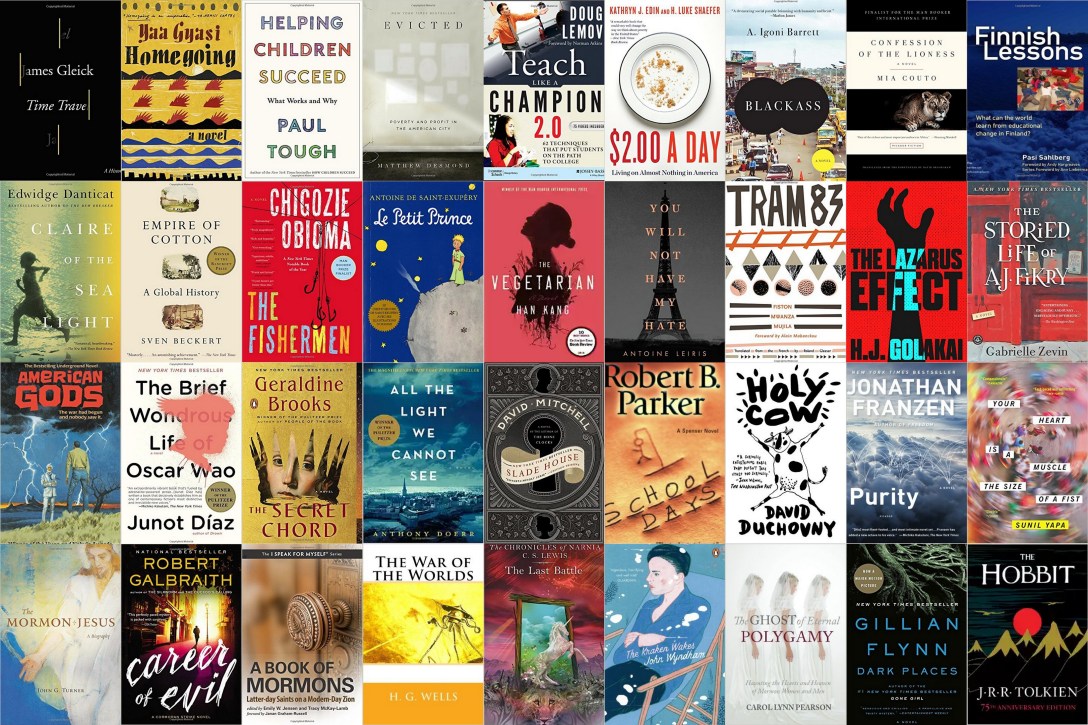
Standout titles were Yaa Gyasi’s Homegoing in fiction and James Gleick’s Time Travel: A History in nonfiction. I managed to write short reviews for 27 of the books. In those cases, I include the link next to the title.

What were your favorite books of the year?

Title Author Rating Format
Fiction
Homegoing (review) Yaa Gyasi 4.5 Audio+Ebook
Le Petit Prince (review) Antoine de Saint-Exupéry 4.5 Audio+Print
Blackass (review) A. Igoni Barrett 4.5 Print
Confession of the Lioness (review) Mia Couto (translated by David Brookshaw) 4 Audio
Tram 83 (review) Fiston Mwanza Mujila 4 Ebook
The Secret Chord (review) Geraldine Brooks 4 Audio
The Hobbit JRR Tolkien 4 Print
The Storied Life of A.J. Fikry (review) Gabrielle Zevin 4 Ebook
American Gods: The Tenth Anniversary Edition Neil Gaiman 4 Audio
The Brief Wondrous Life of Oscar Wao (review) Junot Diaz 4 Audio
Claire of the Sea Light Edwidge Danticat 3.5 Audio+Ebook
All the Light We Cannot See (review) Anthony Doerr 3.5 Audio
Slade House (review) David Mitchell 3.5 Audio
School Days (review) Robert Parker 3.5 Print
Holy Cow (review) David Duchovny 3.5 Audio
The Fishermen (review) Chigozie Obiama 3 Audio
The Vegetarian Han Kang (translated by Deborah Smith) 3 Audio
Purity (review) Jonathan Franzen 3 Audio
A Career of Evil (review) Robert Galbraith (JK Rowling) 3 Audio
The Lazarus Effect (review) HJ Golakai 3 Ebook
War of the Worlds (review) HG Wells 3 Audio
The Last Battle CS Lewis 3 Audio
The Kraken Wakes (review) John Wyndham 2.5 Ebook
Your Heart Is a Muscle the Size of Your Fist (review) Sunil Yapa 2 Audio
Dark Places (review) Gillian Flynn 2 Audio
 Non-fiction 
Time Travel: A History (review) James Gleick 4.5 Audio
Mormon Jesus: A Biography (review) John Turner 4.5 Ebook
Helping Children Succeed: What Works and Why (review) Paul Tough 4 Audio
Evicted: Poverty and Profit in the American City Matthew Desmond 4 Audio
Teach Like A Champion 2.0: 62 Techniques that Put Students on the Path to College Doug Lemov 4 Audio
$2 a Day: Living on Almost Nothing in America (review) Kathryn Edin and Luke Shaefer 4 Audio
The Ghost of Eternal Polygamy: Haunting the Hearts and Heaven of Mormon Men and Women (review) Carol Lynn Pearson 4 Print
You Will Not Have My Hate Antoine Leris 3.5 Audio
Finnish Lessons: What Can the World Learn from Educational Change in Finland? Pasi Sahlberg 3 Audio
A Book of Mormons: Latter-day Saints on a Modern-Day Zion (review) Edited by Jensen & McKay-Lamb 3 Print
Empire of Cotton: A Global History (review) Sven Beckert 2.5 Audio


I Saw 100+ Movies in 2016: The Best and the Rest

Over the course of the year, I saw many movies in many forms – in the theater, on planes, while exercising, during my commute, and at home with my family. I rate each movie on a scale of 1 to 5:

  • 1 = Bad
  • 2 = Okay
  • 3 = Good
  • 4 = Great
  • 5 = Absolutely fabulous!

I generally enjoy movies, so of the 108 movies I’ve seen (so far!) this year, 81 received a good rating or above. Note that I rate movies within genre, so a silly comedy that’s great at being a silly comedy may get the same rating as a serious mediation on war violence that great at being that.

My top six movies for the year (with direct links so you can watch them right now) were Cinema Paradiso (1988 – Amazon/YouTube), Embrace of the Serpent (2016 – Amazon/YouTube), About Elly (2015 – YouTube), Hunt for the Wilderpeople (2016 – Amazon/YouTube), Sing Street (2016 – Amazon/YouTube), and The Wizard of Oz (1939 – Amazon/YouTube). The children’s movie that you probably didn’t see but should is Kubo and the Two Strings (2016 – Amazon/YouTube

Below is the full list, ordered by rating – and then alphabetically within ratings. Links are to Rotten Tomatoes, which gives a synthesis of critical reviews. Bolded titles are the 35 movies I saw in the theater. I occasionally include the movie’s release year to add clarity. Lastly, I didn’t re-calibrated the list at the end of the year, so some ordering may be affected by my mood or the quality of popcorn at the theater.

What did I miss? What did you love?

MOVIE RATING
Cinema Paradiso 5
Embrace of the Serpent 5
About Elly 4.5
Hunt for the Wilderpeople 4.5
Sing Street 4.5
The Wizard of Oz 4.5
10 Cloverfield Lane 4
Batman: The Movie (1966) 4
Brooklyn 4
Captain America: Civil War 4
Dirty Pretty Things 4
Divines 4
Doctor Strange (2016) 4
Eye in the Sky  4
Finding Dory 4
Ghostbusters (2016) 4
States of Grace 4
Guardians of the Galaxy 4
Inside Out 4
Kubo and the Two Strings 4
Kung Fu Panda 3 4
Kung Fu Panda 3 (Yes, I saw this in the theater twice. Boom!) 4
La La Land 4
Les Visiteurs 4
The Measure of a Man 4
Moana 4
Moonlight 4
Mustang 4
Rogue One: A Star Wars Story 4
Roman Holiday  4
Sullivan’s Travels (1941) 4
Tell No One 4
The Bourne Ultimatum  4
The Eagle Huntress 4
The Usual Suspects 4
Zootopia 4
13 Going on 30 3.5
A Cat in Paris 3.5
A Monster in Paris 3.5
Captain America: The Winter Soldier 3.5
Creed 3.5
Denial 3.5
Inside Man 3.5
Le Chef 3.5
Love Actually 3.5
Meet the Robinsons 3.5
Once I was a Beehive 3.5
Oscar nominated animated shorts (2016) 3.5
Romantics Anonymous 3.5
Sleepwalk with Me 3.5
Trolls 3.5
The Finest Hours 3.5
The Little Prince (2015) 3.5
The Lobster 3.5
Man from Reno 3.5
The Rock 3.5
X-Men (2000) 3.5
Candleshoe (1977) 3
Casa Grande 3
Deepwater Horizon 3
Gone in 60 Seconds 3
Hot Girls Wanted 3
How to Steal a Million (1966) 3
I Married a Dumbass (Me casé con un boludo) 3
In Search of the Castaways (1962) 3
Marie’s Story 3
Miss Granny 3
Pete’s Dragon (2016) 3
Pride and Prejudice and Zombies 3
Sliding Doors 3
Spectre 3
Spy 3
Swiss Family Robinson 3
Talladega Nights: The Ballad of Ricky Bobby 3
The Italian Job 3
The Jungle Book (1967) 3
The Jungle Book (2016) 3
The Night My Mother Killed My Father 3
The Parent Trap (1961) 3
The Water Horse: Legend of the Deep 3
Zoolander 2 3
Fan 2.5
Hail, Caesar! 2.5
Jason Bourne 2.5
Midnight Special 2.5
Pee Wee’s Big Holiday 2.5
Pete’s Dragon (1977) 2.5
The Good Dinosaur 2.5
The Intern 2.5
Lion 2.5
The Secret Life of Pets 2.5
X-Men: Apocalypse (dubbed into Italian) 2.5
Zathura 2.5
Casa de Mi Padre (2012) 2
Deadpool 2
High School Musical 2
High School Musical 2 2
Journey to the Center of the Earth (2008) 2
L’age d’or 2
Mother’s Day (2016) 2
Star Wars I: The Phantom Menace 2
Storks 2
Wonderful Nightmare 2
Barbecue (2014) 1.5
Daddy’s Home 1.5
Mascots  1.5
The Do-Over 1.5
All Creatures Big and Small 1

3 questions to guide every experiment, from Dean Karlan of IPA

I always try to reduce things to three questions—even in simple interventions like passing out nutritional supplements to infants and toddlers. These are theory-driven questions that you should be using whenever you’re justifying any intervention whatsoever. 

And the questions are 

  1. “What’s the market failure? Why isn’t the market and the invisible hand working?”
  2. “How does this intervention specifically solve the market failure?”
  3. “What’s the welfare impact of solving the market failure?”

Karlan makes the point that experiments should absolutely be driven by theory. But theory doesn’t have to mean three pages of math. The theory can be simple, and the questions above sum up what your theory should predict.

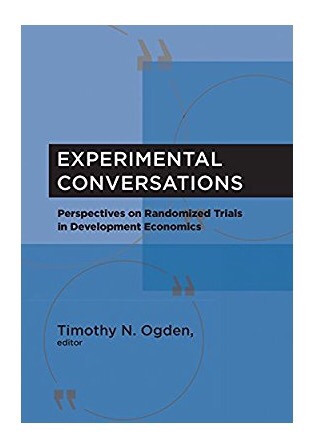
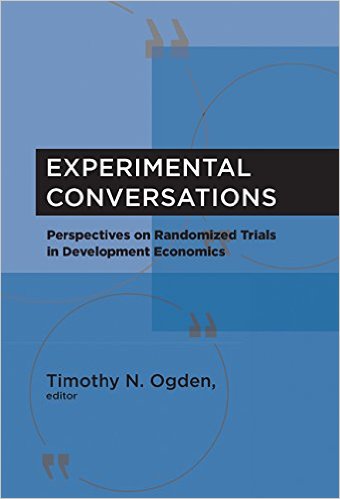
from Tim Ogden’s interview with Dean Karlan in Experimental Conversations: Perspectives on Randomized Trials in Development Economics

Psychology, economics, fantasy, and the funnies all agree about making life choices

Almost ten years ago, I was working at the RAND Corporation, and I received an offer from the World Bank to be a consultant evaluating education programs around Sub-Saharan Africa. I was torn: I had a great job at RAND, and I lived in paradise (a.k.a Santa Monica, California). But I wanted to focus my research fully on international development, which would be easier at the World Bank, and the consultancy seemed really exciting.

As I was mulling it over, I heard this finding in Dan Gilbert’s book Stumbling on Happiness: “In the long run, people of every age and in every walk of life seem to regret not having done things much more than they regret things they did.” That significantly contributed to my decision to make the move, and I’ve really enjoyed what I’ve been able to do so far at the World Bank.

Of course, it’s tough to interpret the findings Gilbert is reporting causally: It could be that the kinds of people who are more likely to make changes are happier people. This summer University of Chicago economist Steven Levitt put out a paper that adds some causal evidence to this:

This paper reports on a large-scale randomized field experiment in which research subjects having difficulty making a decision flipped a coin to help determine their choice. For important decisions (e.g. quitting a job or ending a relationship), those who make a change (regardless of the outcome of the coin toss) report being substantially happier two months and six months later…. To assess causality, I use the outcome of a coin toss. Individuals who are told by the coin toss to make a change are much more likely to make a change and are happier six months later than those who were told by the coin to maintain the status quo. The results of this paper suggest that people may be excessively cautious when facing life-changing choices.

A comic that I saw today from xkcd provides a little more anecdotal support:

settling

I thought of Levitt’s paper as I listened to Neil Gaiman’s fantasy novel American Gods recently. Shadow, the protagonist, agrees to work for an unknown but persistent employer — Wednesday — based on a coin toss:

     Shadow took a quarter from his pocket, tails up. He flick it up in the air, knocking it against his finger as it left his left hand to give it a wobble that made it look as if it were turning, caught it, slapped it down on the back of his hand.
     “Call,” he said.
     “Why?” asked Wednesday.
     “I don’t want to work to work with anyone with worse luck than me. Call.”

In the short run, Shadow takes the job and his life erupts into chaos and (spoiler alert!) death — but that’s not the half of it, so I partially retract the spoiler alert. But my best guess at the counterfactual (what would have happened if Shadow hasn’t taken the job) is that his life would have been the worse for it.

So the takeaway from psychology, economics, fantasy, and the funnies is that if you’re having trouble deciding whether to make a change, maybe that means you should. Or you could just flip a coin.
Bonus reading: You can read about the evaluations I did in those early World Bank days in the Gambia, Sierra Leone, and Tanzania, or about the work that I was doing on cost-effectiveness of education interventions and higher education in Korea while at RAND.

What do African schoolteachers think about mathematics?

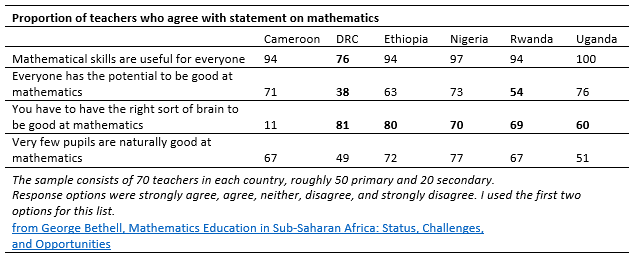
George Bethell has put out a report via the World Bank, Mathematics Education in Sub-Saharan Africa: Status, Challenges, and Opportunities. It brings together an array of analysis on current mathematics performance and teaching around the continent.

I’d like to highlight two elements. First, a survey in 6 African countries shows teacher attitudes towards math. Now, it’s just 70 teachers per country (roughly 50 primary and 20 secondary), so this is suggestive only. Key findings: Almost all teachers agree that mathematical skills are useful for everyone (except in DRC). But between 24 percent and 62 percent of teachers don’t believe that “everyone has the potential to be good at mathematics,” depending on the country, and a majority of teachers in all countries except Cameroon believe that “you have to have the right sort of brain to be good at mathematics.” It’s easy to imagine that these kinds of beliefs then play into the way teachers teach. (You can read more about it in Appendix A of the report.) Of course, I also don’t know how different these are from other parts of the world. The point is not whether these 6 countries are worse or better than other countries, but that teachers in these country have these particular beliefs about math education which may well affect pedagogy.

what-do-african-teachers-think-about-math

The report also lays out what he sees as the big research questions that remain in this area.

  1. How can countries in SSA monitor trends in mathematical achievement?
  2. How do learners understand mathematical concepts as demonstrated by their teachers? How do they approach mathematical problems?
  3. How effective are the textbooks currently being used to teach basic mathematics in SSA?
  4. How can national assessments of student achievement in mathematics be improved so that they provide policy makers and teachers with the information needed to improve outcomes in mathematics?
  5. Where Open Educational Resources have been used as the basis of, or to supplement, formal teacher education development programmes, have they been effective?
  6. Which of the e-learning and m-learning technologies in the classroom have the greatest potential to raise levels of numeracy and mathematical competence? What are the challenges of introducing e- and m-learning technologies – especially in fragile states?

Calling all researchers! To work!

math-questions-to-be-answered

The poor don’t use cash transfers on alcohol and tobacco. Really.

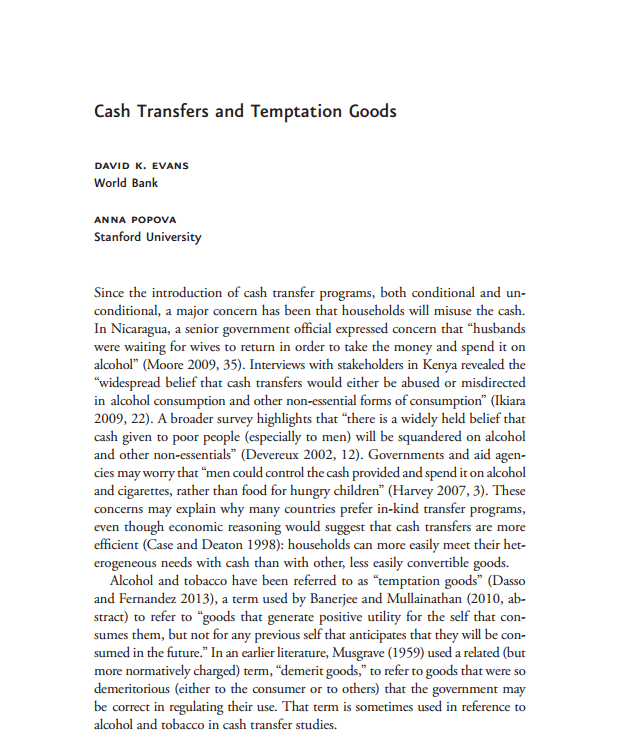
Two years ago, Anna Popova and I put out a working paper examining whether beneficiaries of cash transfer programs are more likely than others to spend money on alcohol and cigarettes (“temptation goods”). That paper has just been published, in the journal Economic Development and Cultural Change.

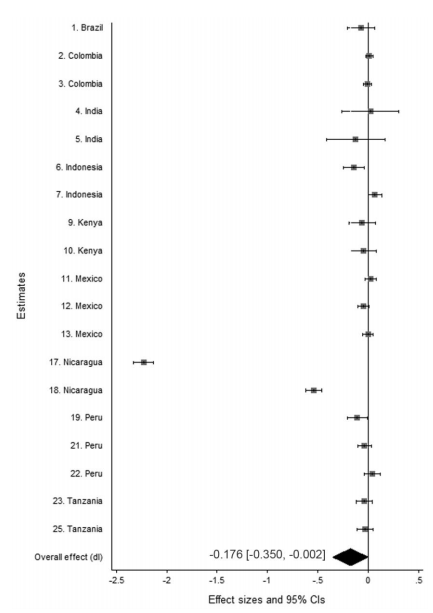
The findings of the published version do not vary from the working paper: Across continents, whether the programs have conditions or don’t, the result is the same. The poor don’t spend more on temptation goods. But for the published version, we complemented our vote count (where you sum up how many programs find a positive effect and how many find a negative effect) with a formal meta-analysis. You can see the forest plot below. (The results are not substantively different from the “vote count” review that we did in the working paper and maintain in the published version as a complement to the meta-analysis.)

meta-analysis

As you can see, while there are only two big negative effects, both from Nicaragua, most of the effects are slightly negative, and none of them are strongly positive. We do various checks to make sure that we’re not just picking up people telling surveyors what they want to hear, and we’re confident that cannot explain the consistent lack of impact across venues.

Why might there be a negative effect? After all, if people like alcohol, we might expect them to spend more on it when they have more money. We can’t say definitively, but even unconditional transfer programs almost always come with strong messaging: Recipients hear, again and again, that this money is for their family, that this money is to make their lives better, and so on and so on. We know from others areas of economics that labeling money has an effect (called the flypaper effect).

So you can be for cash transfers or against cash transfers, but don’t be against them because you think the poor will use the money on temptation goods. They won’t. To quote the last line of our paper, “We do have estimates from Peru that beneficiaries are more likely to purchase a roasted chicken at a restaurant or some chocolates soon after receiving their transfer (Dasso and Fernandez 2013), but hopefully even the most puritanical policy maker would not begrudge the poor a piece of chocolate.”

Over the last 100 years, most US blacks migrated from the South to the North. Did they find what they sought?

Yes and no. Better income and better social conditions, but also a black-white pay gap that changed little over time. Why?

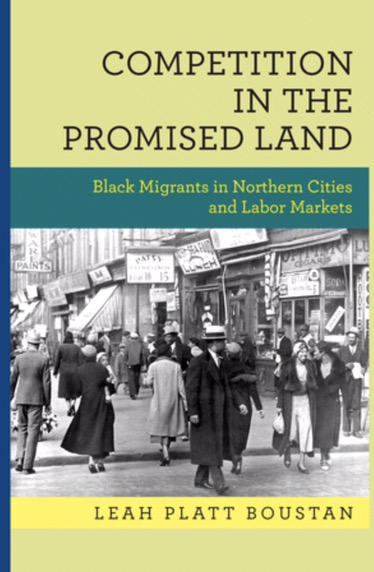
Leah Platt Boustan, UCLA economist (and my friend), just wrote a book on it, Competition in the Promised Land: Black Migrants in Northern Cities and Labor Markets.

This is from James Ryerson’s New York Times review

In her rich and technical account, the economist Leah Platt Boustan employs the tools of her trade — resourceful matching of data sets, rigorous modeling of labor phenomena, sweeping use of census figures — to analyze the demographics and economics of the Great Migration as a whole… Her investigation both deepens our understanding of what we think we know and adds new complexities and wrinkles.

I expect it’s excellent.

dive into this dizzying survey of time travel, time, memory, dreams, by way of literature, film, philosophy, and physics

a review of Time Travel: A History, by James Gleick

Time Travel: A History, could have been pretty short. After all, to quote physicist Stephen Hawking, “The best evidence we have that time travel is not possible, and never will be, is that we have not been invaded by hordes of tourists from the future.”

But instead of restricting himself to an examination of actual time travel, Gleick leads us through a history of the concept of time travel, which is strikingly modern. Before H.G. Wells, authors and their protagonists dreamt of the past and the future, but no one actually traveled there. Then we leap into a deep discussion of time itself, of memory, and of our dreams of the past and the future. We survey literature, from pulpy short stories of the 1920s and 1930s in such august publications as Amazing Stories and Science Wonder Stories to the novels of authors ranging from Jules Verne and Philip K. Dick to Jorge Luis Borges and Virginia Woolf. We swim through the treatment of time travel in film, from Twelve Monkeys to Back to the Future to Midnight in Paris. In time, we jump from Augustine writing in the fourth century to Dexter Palmer’s 2016 novel Version Control. We hear extensively from physicists and philosophers.

This book blew my mind 30 times and I loved it. I highly recommend it, even if you don’t have an inherent interest in science fiction (or the scientific novel, or the hypothetical novel, or the scientific-marvelous novel, or scientifiction, all of which the genre has been called, as we learn in this book).

A few bits that I liked:
  • “Time travel is a fantasy of the modern era.”
  • “Stories are like parasites finding a host. In other words, memes. Arrows of the Zeitgeist.”
  • H.G. Wells: “Literature is revelation,” said Wells. “Modern literature is indecorous revelation.”
  • Ursula K. Le Guin: “Story is our only boat for sailing on the river of time.”
  • T.S. Eliot: “Words strain, / Crack and sometimes break, under the burden, / Under the tension, slip, slide, perish, / Will not stay still.”
  • Jorge Luis Borges: “El tiempo se bifurca perpetuamente hacia innumerables futuros.”
  • Richard Feynman: “I have approximate answers and possible beliefs and different degrees of certainty about different things, but I’m not absolutely sure of anything.”
  • “We’re not very good at understanding causes.”
  • “You can be a time traveler in your own book. If you’re impatient, you can skip ahead to the ending.”
  • In Max Beerbohm’s 1916 story, “Enoch Soames,” a third-rate poet travels one hundred years into the future to see his legacy, which he imagines will be grand. He finds himself listed only as a fictional character in a short story by one Max Beerbohm.

A few other reviews:
  • Anthony Doerr, NYT: “If this new book can sometimes feel like a mind-smashing catalog of literary and filmic references to time ­travel, it’s also a wonderful reminder that the most potent time-traveling technology we have is also the oldest technology we have: storytelling.”
  • Michael Saler, WSJ: “Mr. Gleick’s brisk survey is anything but: He is toying with ideas, playing with past and future. He is having fun, and we all know what that does to time.”
  • Rosalind Williams, Washington Post: “These guests mix and mingle for lively conversations about the paradoxes of determinism, the possibilities of counterfactual history, the challenges of philosophical fatalism, the dangers of metaphors, the problem of finding words to communicate to the future and the limits to logic in understanding the human experience of time, among much else. … ‘Time Travel’ presents a great read.”
  • Kirkus Review: “From Wells to Schrödinger to Twitter, he doesn’t miss a beat, and he imparts a wry appreciation for humorous detail, making him one of the most enjoyable science writers in the field. Though not his best book, this is another fantastic contribution to popular science from Gleick, whose lush storytelling will appeal to a wide range of audiences.”
  • Alvaro Zinos-Amaro, TOR: “Anyone who picks up Time Travel: A History will find quotes and witticisms galore, a plethora of absorbing historical footnotes and trenchant observations on humanity’s relationship with time. And yet they may also find themselves scratching their heads, or worse, skipping pages. There’s much intellectual fun to be had, but rather than a book-length rollercoaster ride, Time Travel is more like a succession of fourteen different rides, unified because they’re in the same theme park.”

I listened to the audiobook, narrated by Rob Shapiro. It was well done.

Has the war over RCTs been won?

Esther Duflo and Abhijit Banerjee of MIT and JPAL weigh in during an interview in Tim Ogden’s forthcoming book, Experimental Conversations, which I am enjoying thoroughly:

Esther: “I think it’s been completely won in that I think it’s just happening. A lot of people are doing it without us. It’s being used. I think it is now understood to be one of the tools. The argument within the economics profession [over the value of RCTs] had two main consequences, both good. First, it raised the profile. If something was debated, people began to believe it must be significant. Second, it did force us to answer the challenges. There were a lot of valid points that were raised and it forced us to react. We’ve become more intelligent as a result.”

Abhijit: “I am less certain that it has been won. The acid test of whether an idea has come to stay is that it becomes something that no one needs to justify using. … RCTs aren’t there yet: it is true almost everyone is doing them, but many of them are taking the trouble to explain that what they do is better than a ‘mere RCT.’ We need to get to the point where people take RCTs to be the obvious tool to use when possible to answer a particular class of empirical questions.”

Beyond incentives: The economist as plumber

Earlier this month, Esther Duflo of MIT gave a talk at the IMF, and the slides are available here. I found the framing insightful.


She goes on to give three examples from impact evaluations in India that seek to improve “the rules of the game,” creating systems for better governance: (1) “fixing the pipes” — eplatform for workfare payments, (2) “changing the faucet” — biometric identification for welfare payments, and (3) “replacing the meter” — inspections on polluting compliance.