book reviews (mine & others’): Say You’re One of Them, by Uwen Akpan

I read this because of Amani’s review for the Africa Reading Challenge.  She was right: it was wildly depressing, but not without good cause.  There are some depressings we should read.  My thoughts:

uneven but worthy voice to Africa’s children


Akpan seeks to give voice to Africa’s suffering children.*  Each of his stories portrays children or adolescents caught in the midst of an African tragedy, whether it’s Rwanda’s genocide, child trafficking in West Africa, or the grinding poverty of street life in Kenya.


Each of the stories delves and yield insight into challenges that most Western readers can barely fathom.  Akpan strives and often succeeds in capturing the confusion, uncertainty, and stress that life imposes on many of the world’s children.  Not all the stories are equally captivating: Luxurious Hearses drags while My Parents’ Bedroom is excellent (while almost inconceivably tragic).


Here are the stories, from the strongest to the weakest.  I highly recommend the top two and recommend the rest.


  • My Parents’ Bedroom – Rwandan genocide
  • An Ex-mas Feast – street family in Kenya
  • Fattening for Gabon – child trafficking in West Africa
  • What Language Is That? – religious strife in Ethiopia
  • Luxurious Hearses – violence in Nigeria

I hope that Akpan keeps writing.  I will read.


Links to other reviews:

Lost Friends, by Lenrie Peters

They are imprisoned
In dark suits and air-conditioned offices
Alsatians ready at the door
On the saliva carpeted floor

They spend their nights
In jet airlines –
Would change them in mid-air
To show how much they dare

Drunk from the vertigo
Of never catching their tails
They never seem to know
When not to bite their nails

Their new addiction
Fortifies their livers
They are getting there
While the going’s good
They have no time for dreamers.

Lenrie Peters is a Gambian surgeon and poet, born in 1932. Here is a bio. Here are a photo and more of his poems.

[from Poems of Black Africa, edited by Wole Soyinka.]

book review – On the Road With Joseph Smith: An Author’s Diary

This was a great, slim (I want to say little but I found it quite powerful) read.

excellent insights on many levels

When Richard Bushman sent the final proofs of Joseph Smith: Rough Stone Rolling to the publisher, he started an author’s diary which he kept regularly for the following year, through publishing, reviews, book signings, lectures, and more. This slim book is that diary, and in just 130 pages it delivers the insights of several books. I think the book will be interesting to biographers who will see kindred struggles, to writers seeking to reach diverse audiences, and to Mormons who seek orthodoxy without sacrificing intellect. (It will be most interesting, however, if you have read Rough Stone Rolling.)

In the pages of this diary, we read Bushman’s candid reactions to reviews: “I realize I don’t like to read any kind of review, even the favorable ones. I am annoyed by what the reviewers choose to emphasize in Joseph’s life. Most of them pick up a few fragments and present them as if they were the key elements” (31-32). He also admits to monitoring other indicators of reception: “I look up my Amazon rank a couple of times a day. I tell myself I am curious about how the system works, but it is mostly vanity I know” (55). The play-by-play response to reviews illustrate the frustration of an author in seeking for his work to be understood and seeing reviewers read only part of the book or completely miss the point.

Bushman also provides some of his own doctrinal exposition. He is a practicing Mormon (a patriarch and a temple sealer, both respected positions in the Church) with – as he puts it – an orthodox testimony. “A man…said, I bet your testimony is different from that of people in this room. I said it was, but that I believed in the gold plates” (108). He shares in this very personal book some of his views on our relationship to God (60-61), his view of a potential new public persona for the Church (105-106), and spiritual counsel on how to deal with doubts about Joseph Smith (110-111).

Bushman’s principal dilemma in writing Rough Stone Rolling was trying to speak to both believing Mormons (many of whom have heard only praise for Joseph Smith throughout their lives) and curious non-Mormons (many of whom have never taken Smith seriously despite his accomplishments). As he reads reviews and gives talks, it becomes clear that he has lost some of the Mormons (one unnamed General Authority suggests his book will provide ammunition for anti-Mormons, others are supportive) and many of the non-Mormons (who see him as too sympathetic). He formulates an alternative approach he could have used to help non-Mormons along, and he questions (but ultimately defends) his decision to be explicit in his position as a practicing Mormon. Throughout, and especially in an essay he includes in the last few pages (123-127), he explores the question of how much of oneself to insert into a biography.

Finally, on a personal note, I enjoyed encountering books and people I have read. He talks about Greg Prince’s recent (excellent) David O. McKay and the Rise of Modern Mormonism and about having interactions with Laurel Thatcher Ulrich (whom I have had the pleasure of getting to know). He talks about interactions with Church leaders – Elder Holland, Elder Packer. These made the book feel a little more like family.

Fascinating, quick read, with parts to be enjoyed more than once. Highly recommended.

Chris Abani: not just Things Fall Apart

In Africa, the complicated questions we want to ask about what all of this means has been asked from the rock paintings of the sand people through the Sunjatha epics of Mali to modern contemporary literature.  If you want to know about Africa, read our literature, and not just Things Fall Apart, because that would be like saying I’ve read Gone With the Wind and so I know everything about America.

from Nigerian writer Chris Abani‘s excellent TED talk, watchable here.

[Note: he uses one swear word; so if that gets you down, now you know.]

8 more Africa Reading Challenge reviews: several books I’ve never seen

So I’ve read the first four listed here, and I’d recommend #3 strongly.  Before you read #4, read Adichie’s newer book (Half of a Yellow Sun).  Several of the new ones look great!

I’m working my way through Say You’re One of Them.  I just finished the short story about child trafficking in West Africa.  Cheery stuff.

local literature?

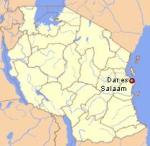
This evening I went running through Dar es Salaam, Tanzania.  I brought 5,000 Tanzanian shillings (about $5) with me in case of emergency.  After about 20 minutes, I passed a table by the side of the road where a book peddler was packing up his wares.  I can never resist the pull of a pile of books, so I looked over the collection.  He had the usual fare: lots of outdated American textbooks, a couple of books by African writers, The Mystery of Atlantis.  I’ve always had trouble finding locally written literature in Tanzania, even in Swahili, although I have a few books in Swahili at home.

So I bought a copy of Studs Terkel’s weighty Working (oral histories of people about their jobs).  I enjoyed jogging home with the hefty volume in my hand, imagining fighting off muggers with Studs.

reseña del libro: El juego del ángel, por Carlos Ruiz Zafón

For those of you who loved The Shadow of the Wind, here’s a sequel!  Not a sequel exactly: another book in the Cemetery of Forgotten Books series.  It stands alone but has some common characters.  It’s not out in English yet, but you have something to look forward to.


no es todo lo que fue «La sombra del viento», pero capta de todos modos

En La Sombra del viento (SDV), Carlos Ruiz Zafón compartió su amor de los libros con nosotros, los lectores. En «El juego del ángel», comparte su amor compañero del arte de escribir. Nos presenta a David Martín, un joven que escribe noticias cortas para un periódico de poca fama. Al rato David tiene la oportunidad de escribir un cuento – en episodios – para el periódico. Así comienza su carrera de escritor. Unos años después David conoce a un editor misterioso que le ofrece la oportunidad de escribir un libro especial en cambio de una cantidad absurda de dinero.

Zafón capta la atención como antes; jamás he leído un libro en español tan rápido. Hay un misterio central, el amor inalcanzable, una casa con un secreto, varios personajes misteriosos, y – como siempre – una pasión para la literatura. Este libro está más oscuro que SDV: más asesinatos y más maldiciones. Además, David es menos simpático que el carácter principal de SDV (aún durante la época difícil de aquél). Pero le llegamos a apreciar.

Vemos a algunos amigos del otro libro (aunque no se releva la relación exacta hasta el fin del libro), y Zafón continua la demostración de su otra pasión (además de la con la literatura): ¡Barcelona! La gran debilidad es que se acaba de una forma sumamente abrupta. Cuando llegué a las últimas diez páginas, no pude imagine cómo se iba a resolver todo en diez páginas. Pensé lo mismo cuando faltaban cinco páginas. Dos de los misterios centrales se resuelven en las últimas dos páginas.

Dicho eso, estoy enamorado de la forma en que Zafón teje un tapiz intrincado de un cuento. No solo habla de su amor a la literatura y al escribir sino también los demuestra por su ejemplo.


book review: Joseph Smith the Prophet, by Truman Madsen

I thoroughly enjoyed this book aimed at the believer.  My thoughts below, followed by notes on a number of portions of the book that struck me particularly.

a loving witness to the Prophet Joseph Smith

Truman Madsen here draws on a deep well of primary (and other) sources to bring the reader to know the prophet Joseph. Madsen writes, “If my elementary shifting of documents and sharing of impressions moves others to look not simply at Joseph Smith but through him to the Master – and, with those efforts, to take a searching look at themselves – my efforts will have been more than worthwhile” (p5).

This book is the written adaptation of Madsen’s famous Joseph Smith tapes, recorded from a series of lectures at BYU’s Education Week. I heard these tapes when I was a missionary for the Church of Jesus Christ of Latter-Day Saints in 1994 or 1995 and was deeply inspired. A few years ago, I borrowed a copy of the tapes from my brother and had a very different reaction: I found Madsen’s wildly dramatic delivery of the lectures distracting and annoying. But the stories were still powerful, so I obtained a copy of the book. I’m very glad that I did.

The book could be subtitled, “Marvelous and powerful stories you don’t know about the prophet Joseph Smith and his friends,” for ultimately – beyond the structure Madsen places on them – that is what the book entails. Much of the deliciousness appears in the footnotes, where Madsen gives his sources (again, most of them primary) and tells stories that don’t fit in the lectures.

The book starts from the assumption that Joseph Smith is a prophet and a good man. For a more historical and thorough treatment of Joseph Smith (also by a member of the Church), try Bushman’s Joseph Smith: Rough Stone Rolling.

I found it very inspiring. It indeed led me to look beyond Joseph and the other early members to the Savior: their love for Him and for His work inspires me to seek to do and to be better.

Notes on my favorite parts below

Continue reading “book review: Joseph Smith the Prophet, by Truman Madsen”

social sciences as sorcery

Stanlislav Andreski, in the delightfully understated foreward to Social Sciences as Sorcery, in which he argues that much of social science is worthless:

A renowned author would have to be a most extraordinary character…to be able to write prolifically in the full knowledge that his works are worthless and that he is a charlatan whose fame is entirely undeserved and based solely on the stupidity and gullibility of his admirers. Even if he had some doubts about the correctness of his approach at some stage of his career, success and adulation would soon persuade him of his own genius and the epoch-making value of his concoctions. When, in consequence of acquiring a controlling position in the distribution of funds, appointments and promotions, he becomes surrounded by sycophants courting his favours, he is most unlikely to see through their motivation; and, like wealthy and powerful people in other walks of life, will tend to take flattery at its face value, accepting it as a sincere appreciation (and therefore confirmation). p9

And one more bit

In any case, the most deadly agents of cultural infections are not the brazen cynics, but the sectarians prone to self-delusion and the timorous organization men anxious not to miss the band-waggon, who unquestioningly equate popularity and worldly success with intrinsic merit. p10

The take-away and the tossed bone:

I argue on the pages that follow that much of what passes as scientific study of human behavior boils down to an equivalent of sorcery, but fortunately there are other things as well. P10

Continue reading “social sciences as sorcery”

ARC book review: Emma’s War, by Deborah Scroggins

I read this because I came across the audiobook and essentially read every audiobook I encounter about Africa.  I enjoy these journalist and aid worker memoirs less and less relative to voices of actual African writers.  But, my thoughts…

a look at the West’s myriad and whimsical motives for interventions in Africa

Scroggins uses the life of aid worker cum rebel-wife Emma McCune to characterize the Sudanese north-south civil war. The author folds a series of stories into one volume: the life of McCune (from aristocratic British child with pony and all to adventurer to aid worker to wife of a Sudanese rebel leader), the experience of the Scroggins herself (who spent many years as a journalist in Africa), and the history of Sudan (from colonial times to the present).

[If you’re going to read one readable (i.e., not terribly dense) book about Sudan, I recommend Dave Eggers’ What Is the What, the fictionalized account of a Sudanese refugee boy in which Eggers discusses both the north-south civil war and the mass killings in Darfur.]

This book’s greatest value – and Scroggins recognizes this – is not so much in its insight into Sudan but rather in its insight into the West. We see Emma leaping into aid work as an escape from boredom, we see some aid workers water skiing back and forth in front of refugee camps while others work around the clock in feeding centers, and we see how Emma’s marriage to a Sudanese rebel affects the politics of local aid provision.** Scroggins also gives a larger history of Western intervention in Sudan. Her exploration of the manifold and whimsical motivations of Western involvement is insightful and worthwhile.

That said, I found the pre-Sudan life history of McCune (a chunk of the beginning of the book) tiresome, and occasionally Scroggins’ judgment jumps the gun on her analysis.* But in general she seeks to apply an even hand. Scroggins’ own observations from her time as a journalist provide a compelling illustration of the situation in southern Sudan (25 years ago, anyway). I also learned where anthropologists can get jobs (the UN, apparently).

I wouldn’t rush out to buy this book, but I’m not sorry I read it.

I listened to the unabridged audiobook read by Kate Reading (an appropriate name for a narrator), published by Blackstone Audio. It comes in a bit long at 12 CDs, but Reading gives a fine…well, Reading.

* For example, she comments that “the New World Order [i.e., peace in Africa] was desirable only if it could be achieved without cost to American lives” (326). Of course, this presumes that the West is capable of achieving this at some higher cost, which presumption is not obviously true.

** When I read of Emma going as an aid worker and marrying a local person, I was reminded of the wildly different story of Kenneth Goode, the anthropologist who married a Yanamamo woman.