Magic, mayhem, and inspiration — A review of Tove Jansson’s Finn Family Moomintroll

A few months ago, I was in Finland, and I asked two education professionals over dinner, “What are the books that every Finn has read, whether in school or outside?” They gave me two: Seven Brothers, by Aleksis Kivi (published in 1870), and the Moomin books, by Tove Jansson (published between 1945 and 1993).
moomin and snufkin
When I returned home, I picked up Finn Family Moomintroll from the library and read it aloud with my 6-year-old daughter. It is delightful and crazy and continually surprising. Moomintroll is the protagonist, a good-natured, roundish creature who lives in Moomin Valley with his mother, his father, and a whole pile of other creatures. Early on, Moomintroll and his friends Snufkin and Sniff find a hat. Back home, they use it as a wastebasket and discard some eggshells in it. The eggshells then turn into mini-clouds that Moomin and his friends are able to fly around on. All kinds of other adventures ensue. At one point, a character discovers a significant amount of gold.
“I wonder what you’re all thinking of doing with the Snork’s gold?” said Snufkin.
“I think we shall use it to decorate the edges of the flower beds,” said Moominmamma, “only the big bits, of course, because the little ones look so rubbishy.”
Two creatures — Thingumy and Bob — show up who speak largely in spoonerisms: “‘Don’t nake any totice,’ whispered Bob.” Ultimately, a magician called the Hobgoblin shows up — it turns out the hat was his — as he realizes that the ruby he was seeking in the valleys of the moon is actually in Thingumy and Bob’s suitcase. The Hobgoblin then grants wishes to everyone, not without a little mischief: The Muskrat had been reading a book entitled On the Uselessness of Everything; his wish is merely for his book to be returned, but when he gets it back,
“‘On the Usefulness of Everything’,” read the Muskrat. “But this is the wrong book. The one I had was about the Uselessness of Everything.”
But the Hobgoblin only laughed.
Peppered throughout the inspired lunacy are these little nuggets of anti-materialism and optimism. I keep wanting to compare these books to others: They’re like Winnie the Pooh but less safe (in the best possible way). They’re like the Smurfs but smart. But it’s ultimately a futile task: the Moomin inhabit their own world entirely. What the book lacks in narrative momentum, it makes up for in inventiveness and hope. I loved it.
Bits and pieces
  • My daughter and I are now reading Tales from Moominvalley (another book in the series), and I’m reading the collected Moomin comic strips that Jansson also wrote to all my children together.
  • Moominmamma on education: “Moomins go to school only as long as it amuses them.”

How to read a lot more books

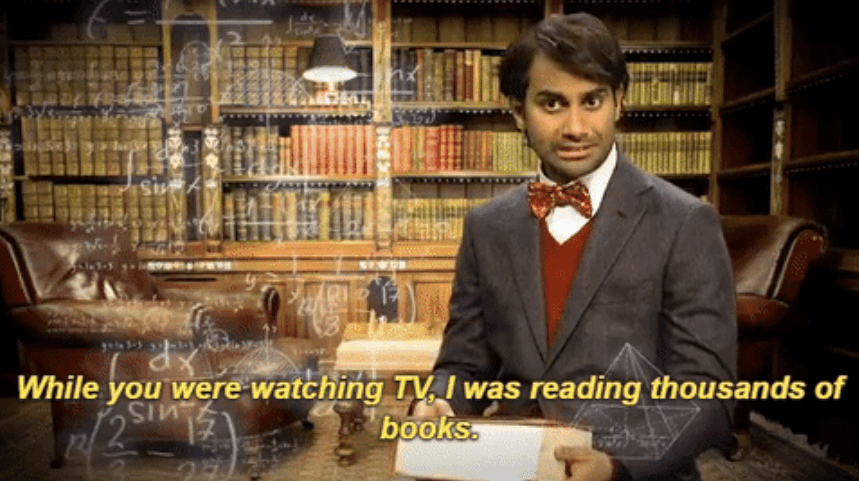
While hopefully not as annoyingly as Aziz Ansari’s Saturday Night Live character The Bookworm, many of us would like to read more.

Two recent articles highlight how to read more. If you want all their tips, read the articles. Here, I’ll highlight those that resonate with me. In Neil Pasricha’s 8 ways to read (a lot) more books this year, he talks about going from five books a year to 50. He recommends the following steps among others; I just chose my favorites. The bolded words are his; the rest is my editorializing.

  1. Centralize reading in your home.  He suggests having a bookshelf rather than a TV at the center of your living space.
  2. Make a public commitment. Among some of my siblings, we usually run some sort of reading challenge from year to year. Sometimes it’s a bingo board where you try to reach books in a wide range of categories. This year, we’re trying to each read at least ten books by non-U.S. authors.
  3. Reapply the 10,000 steps rule. Here, he refers to the idea of walking 10,000 steps, taking advantage of every opportunity. “When do I read now? All the time. A few pages here. A few pages there. I have a book in my bag at all times.”

He shares a wonderful (undocumented) anecdote about author Stephen King:

A good friend once told me a story that really stuck with me. He said Stephen King had advised people to read something like five hours a day. My friend said, “You know, that’s baloney. Who can do that?” But then, years later, he found himself in Maine on vacation. He was waiting in line outside a movie theater with his girlfriend, and who should be waiting in front of him? Stephen King! His nose was in a book the whole time in line. When they got into the theater, Stephen King was still reading as the lights dimmed. When the lights came up, he pulled his book open right away. He even read as he was leaving.

In Charles Chu’s In the time you spend on social media each year, you could read 200 books, he talks about reading 200 books each year. One tip is to “go multi-medium.” Chu writes:

If your goal is to read more, you can’t be picky about where you read or what mediums you use. I read paper books. I read on my phone. I listen to audiobooks. And I do these things everywhere—on park benches, in buses, in the toilet… Wherever I can. Make your reading opportunistic. If you have a chance, take it. If you don’t have a chance, find one.

I’ve found this to be my single best strategy for reading a lot. Right now I’m reading an ebook on my phone, listening to an audiobook on my phone, listening to another audiobook on my swimming iPod (you know, so I can swim and listen to books at the same time), and reading one print book around the house. That way I can read anytime, anywhere.

Chu also recommends stepping away from social media and TV. In his not-at-all-judgmental way, he writes:

Here’s how much time a single American spends on social media and TV in a year: 608 hours on social media. 1642 hours on TV. Wow. That’s 2250 hours a year spent on TRASH. If those hours were spent reading instead, you could be reading over 1,000 books a year!

Unlike Mr. Chu, I enjoy my TV consumption and my social media use, and I learn from them, like this bit I learned from Joan Cusack the TV show A Series of Unfortunate Events:

32654688170_227b8dfa13_o

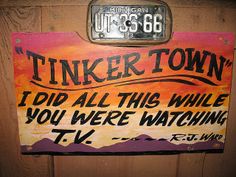
That said, I’d probably be happier and wiser with a little less time on Facebook and more with my nose buried in a book. I remember visiting the wonderful Tinkertown Museum in Albuquerque, New Mexico. Over 40 years, Ross Ward carved and collected his way to an amazing museum collection of wooden figures. Near the exit, I saw this sign.

ward television

[Source]

So my aspiration isn’t to carve a museum of wooden figures, but I do like reading books. Maybe I’ll read or listen to 50 this year.

Happy reading!

Bonus reading:

Revenge is a dish best served cold. Twelve years cold. In a production of the Tempest. Performed by prison inmates.

A review of Margaret Atwood’s Hag-Seed

Felix Phillips is the artistic director of a theater festival. His style is avant-garde: “What was so bad about MacBeth done with chainsaws? Topical. Direct.” But he is pushed out by an underhanded business partner and goes off the grid for twelve years. He starts running a Shakespeare class for inmates at a local prison, and his plans for vengeance ensue. The whole novel is written with eager delight, pushing the plot forward. I couldn’t stop listening to it. 

Margaret Atwood has written an update to the Tempest in which the protagonist is fired during a production of the Tempest, enacts his vengeance during another production of the Tempest, all while his life adheres to the broad outlines of the Tempest. Despite some required suspension of disbelief, it’s an adventure.

You don’t need to be a Tempest expert to enjoy this, but I’d recommend skimming a plot summary of the Bard’s original, just to put Atwood in context.

Odds and ends

On paying taxes: “Such was the minimum price to be paid for the privilege of walking around on the earth’s crust and continuing to breathe, eat, and sh**, he thought sourly.”

On getting fired: “Felix climbed into his unsatisfactory car and drove out of the parking lot, into the rest of his life.”

On swearing: During the class, prisoners had a running competition. They could only use swear words found in the text of the play, and they lost points for any other swears.

Don’t believe me? Read other reviews.

POSITIVE

Viv Groskop, The Guardian: “This is written with such gusto and mischief that it feels so much like something Atwood would have written anyway. The joy and hilarity of it just sing off the page. It’s a magical eulogy to Shakespeare, leading the reader through a fantastical reworking of the original but infusing it with ironic nods to contemporary culture, thrilling to anyone who knows The Tempest intimately, but equally compelling to anyone not overly familiar with the work….It’s riotous, insanely readable and just the best fun.”

Rebecca Abrams, Financial Times: “Rap songs, Disney dolls, video montages and special effects spin her version off into a deliciously brave new world of its own….Hag-Seed is not only a fine example of the shape-shifting versatility of Shakespeare’s texts, but a successful novel in its own right….Hag-Seed displays Atwood’s inventiveness at its shining best, a novel that enchants on its own terms and returns you to the enchantments of the original.”

MIXED

Emily St. John Mandel, The New York Times: “The novel to this point is a marvel of gorgeous yet economical prose, in the service of a story that’s utterly heartbreaking yet pierced by humor, with a plot that retains considerable subtlety even as the original’s back story falls neatly into place. But the prison production of “The Tempest” leads to some of the book’s clunkiest elements.”

Books and authors mentioned in the book (read by the prisoners), besides Shakespeare:

  • Catcher in the Rye
  • Stephen King
  • Curious Incidence of the Dog in the Nighttime 

Getting true voluntary consent for your field experiment may be harder than you think

Kim Dionne recently interviewed Melissa Graboyes on the excellent new Ufahamu Africa podcast. Graboyes wrote a history – The Experiment Must Continue: Medical Research and Ethics in East Africa, 1940-2014. I’m reading the book, and Graboyes provides a rich picture, filled with first-person reports from East African participants in research.

Dionne asked Graboyes for key takeaways. Here’s one on consent, which very much applies to social science research.

People regularly mistake the idea that they are participating in an experiment and it’s designed to benefit them personally, rather than the experiment is designed to generate data that can be used to answer important questions and hopefully get us closer to solving some important problems. This disconnect is really profound and it jeopardizes consent.

The basic components of consent laid in the Nuremburg code, laid out in European guidelines, laid out in U.S. national law, is that consent has to be informed, it has to have understanding, and it has to be voluntary. So we can inform people by giving them a consent form translated into Swahili. We can inform them by reading that consent form in Swahili. But if they don’t understand what we’re saying and can’t accurately describe back the kind of experiment they’re participating in with the commensurate risks and benefits that go with it, that’s not really voluntary consent, and it jeopardizes the idea that they are autonomously choosing to participate. I think that there’s a lot of research going on that is stumbling at that step, that we’re formally checking all the boxes we need to, but that we’re not adhering to the real meaning of what that rule is supposed to be about. [I’ve edited very slightly for readability.]

The interview has much more, and the podcast overall is a delight. I recommend it and Graboyes’ book.

Do markets change the goods for sale? Do they erode social norms?


If you’re going to read one review of Sandel’s book, read Deirdre McCloskey’s. If you have energy for one more, read mine.

Consider three true tales:

“Barbara Harris, the found of a North Carolina-based charity called Project Prevention, has a market-based solution [to the problem of babies being born to drug-addicted mothers]: offer drug-addicted women $300 cash if they will undergo sterilization or long-term birth control. More than three thousand women have taken her up on the offer since she launched the program in 1997.”

“It’s not easy to compose an elegant wedding speech, and many best men don’t feel up to the task. So some have resorted to buying wedding toasts online. ThePerfectToast.com is one of the leading websites offering ghostwritten wedding speeches…. You answer a questionnaire online…and within three business days you receive a professionally written custom toast of three to five minutes.”

“As a single mother of an eleven-year-old boy who was struggling in school, Kari Smith needed money for her son’s education. In an online auction in 2005, she offered to install a permanent tattoo advertisement on her forehead for a commercial sponsor willing to pay $10,000. An online casino met her price.”

What should be for sale? Reproductive rights? Tokens of friendship? Skin space? Health care? A love of learning? In this slim tome, Harvard professor and philosopher Michael Sandel explores the expansion of market-oriented thinking into a wide array of new areas, as the examples above demonstrate. Sandel offers about a hundred more: “The reach of markets, and market-oriented thinking, into aspects of life traditionally governed by nonmarket norms is one of the most significant developments of our time.” As he lays it out, markets do two potentially good things: First, markets tend to make the buyer and the seller better off. Otherwise they wouldn’t both be buying and selling. So if people are freely engaging in market behavior (even around things traditionally governed by norms), it is probably making them better off. (Sandel does point out that not all market behavior is “freely” engaged in, as one could argue with the drug addicts in the first example above.) Second, markets pass no judgment on transactions. If people want to buy or to sell their body space, why should a bystander be permitted to block that?

But his largest point against markets is that they may change the nature of the good being bought or sold (i.e., they may “corrupt” the item or the interaction). If selling fast passes at amusement parks and airports changes the nature of interactions in these spaces, then markets are changing the item. If trying to buy students’ motivation by paying them to read books crowds out their intrinsic interest in reading books, then the market behavior is changing the nature of the item for sale. (Sandel partially surveys the evidence on this: The effectiveness is mixed.) That doesn’t mean we shouldn’t ever do it:

“I do not claim that promoting virtuous attitudes toward the environment, or parenting, or education must always trump competing consideration…. If paying underachieving kids to read books brings a dramatic improvement in reading skills, we might decide to try it, hoping we can teach them to love learning later. But it is important to remember that it is bribery we are engaged in, a morally compromised practice that substitutes a lower norm (reading to make money) for a higher one (reading for the love of it).”

Indeed, we have some evidence from teacher incentives in the USA (Jinnai 2016) and from student incentives in India (Visaria et al. 2016) that suggests that after incentive programs are discontinued, some teachers or students perform worse than before the program was introduced. So these are not purely theoretical considerations.

Sandel doesn’t offer clear answers, but he poses important questions. As I listened to the audiobook, I alternated between thinking hard about markets in the fields I work in (education, health, social safety nets) and where we should think carefully about the erosion of norms, and being mildly annoyed at what I see as a pretty reductive view of economics (Freakonomics is quoted repeatedly in an effort to define modern economics).

I’m comfortable with far more markets than Sandel is, but maybe not all of them.

Reviews and reactions:
  • Dierdre McCloskey, personal website (economist): Sandel “does, to his credit, give many interesting examples of the moral dilemma in choosing money over status or queuing to allocate things, from selling kidneys to buying baseball players. Yet surprisingly for someone who has taught over the years 15,000 students in his famous course, Moral Reasoning 22, Sandel’s moral ideas in the book have no discernible connection to human moral thinking since Moses and Confucius and Socrates. The kids deserve better. His moral thoughts in fact are two only, and thin versions even of these: that equality is good; and that the sacred can be corrupted by the profane.”
  • Diane Coyle, Independent (economist): “This entertaining and provocative book is full of examples of vulgar commercialisation…. A lot of us will agree that there is far too much of this in modern life. However, there are examples in this book of the expansion of markets in ways that many people, especially economists, would mostly regard as beneficial, but the author argues are degrading…. What Money Can’t Buy will tap into a widespread unease about having to limit government and accept a larger private domain in this age of austerity; and about crass commercialisation when unemployment and inequality are too high. But it does not offer a clear guide to which markets are repugnant, and why.”
  • Philip Badger, Philosophy Now (philosopher): “His argument, which is difficult to resist in several respects, comes down to the point that the increasing commodification of our existence is a form of corruption which undermines both our relationships with each other and the relationship of the individual with society.”
  • John Lanchester, The Guardian (novelist & journalist): “Let’s hope that What Money Can’t Buy, by being so patient and so accumulative in its argument and its examples, marks a permanent shift in these debates. Markets are not morally neutral…. Anyone who is already in agreement with the ideas Sandel is advancing – a fairly numerous group of his readers, I’d have thought – may well want a more sweeping, angrier book, one that is more heated about the morally debased landscape brought to us by the ubiquity of market thinking.”
HT Mario Macis — who does great work on morally controversial transactions — for sharing the McCloskey review.

Lessons from a very productive economic historian: “Get it done and get it out”

I’m reading Greg Prince’s biography of economic historian Leonard Arrington. Early on, one of his mentees reports, “One of the lessons that Leonard taught me was to get it done and get it out.”

Arrington’s massive bibliography evidences that he followed his own advice. David Whittaker compiled the 35 page bibliography for the Journal of Mormon History, including 259 “articles in professional publications and chapters in books,” and more than 35 books, 68 articles in non-professional publications, and many reviews.*

Here’s a little sample:

bibliography

Arrington had amazing concentration: “When he got to the point that he was ready to write the article, he would go down into that office and stay there for 72 hours. His wife would bring him food.” Now, Arrington didn’t contribute equally to every one of these articles. “Not everyone agreed with the division of labor, with some feeling that Leonard’s name appeared at times when his contribution wasn’t sufficient to merit co-authorship…. ‘Of course, that wasn’t unusual for people who were the head of that kind of thing [the historical department he led].'”

But he got those papers out!

As Linda Ginzel at the University of Chicago writes, “If you don’t write it down, it doesn’t exist.” And as Raul Pachego-Vega writes for the Twitter crowd, #GetYourManuscriptOut.

I’d better get back to writing.

* For books, I took the “books, monographs, and pamphlets” section of his bibliography and counted everything over 100 pages.

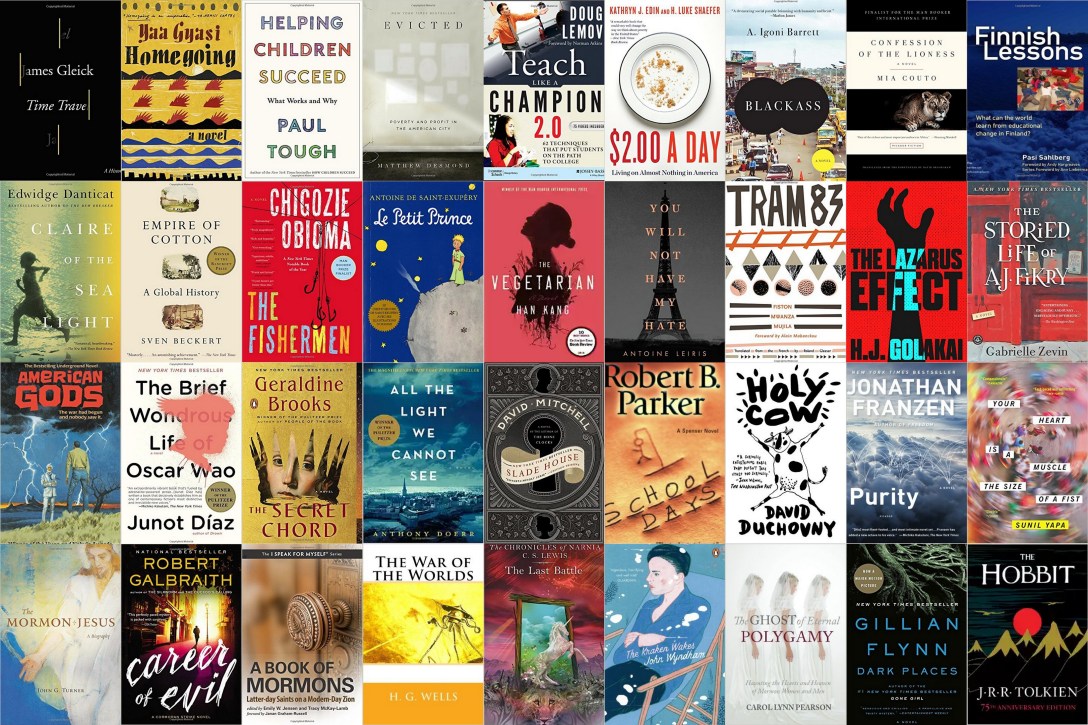
I Read or Listened to 36 Books in 2016: The Best and the Rest

Over the course of this year, I consumed three dozen books in an array of formats – audio, ebook, print, or a mix. As with my movies, my rating is as follows: 1 = bad; 2 = okay; 3 = good; 4 = great; 5 = wow!

Standout titles were Yaa Gyasi’s Homegoing in fiction and James Gleick’s Time Travel: A History in nonfiction. I managed to write short reviews for 27 of the books. In those cases, I include the link next to the title.

What were your favorite books of the year?

Title Author Rating Format
Fiction
Homegoing (review) Yaa Gyasi 4.5 Audio+Ebook
Le Petit Prince (review) Antoine de Saint-Exupéry 4.5 Audio+Print
Blackass (review) A. Igoni Barrett 4.5 Print
Confession of the Lioness (review) Mia Couto (translated by David Brookshaw) 4 Audio
Tram 83 (review) Fiston Mwanza Mujila 4 Ebook
The Secret Chord (review) Geraldine Brooks 4 Audio
The Hobbit JRR Tolkien 4 Print
The Storied Life of A.J. Fikry (review) Gabrielle Zevin 4 Ebook
American Gods: The Tenth Anniversary Edition Neil Gaiman 4 Audio
The Brief Wondrous Life of Oscar Wao (review) Junot Diaz 4 Audio
Claire of the Sea Light Edwidge Danticat 3.5 Audio+Ebook
All the Light We Cannot See (review) Anthony Doerr 3.5 Audio
Slade House (review) David Mitchell 3.5 Audio
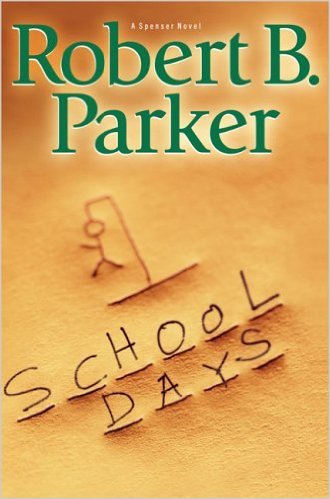
School Days (review) Robert Parker 3.5 Print
Holy Cow (review) David Duchovny 3.5 Audio
The Fishermen (review) Chigozie Obiama 3 Audio
The Vegetarian Han Kang (translated by Deborah Smith) 3 Audio
Purity (review) Jonathan Franzen 3 Audio
A Career of Evil (review) Robert Galbraith (JK Rowling) 3 Audio
The Lazarus Effect (review) HJ Golakai 3 Ebook
War of the Worlds (review) HG Wells 3 Audio
The Last Battle CS Lewis 3 Audio
The Kraken Wakes (review) John Wyndham 2.5 Ebook
Your Heart Is a Muscle the Size of Your Fist (review) Sunil Yapa 2 Audio
Dark Places (review) Gillian Flynn 2 Audio
 Non-fiction 
Time Travel: A History (review) James Gleick 4.5 Audio
Mormon Jesus: A Biography (review) John Turner 4.5 Ebook
Helping Children Succeed: What Works and Why (review) Paul Tough 4 Audio
Evicted: Poverty and Profit in the American City Matthew Desmond 4 Audio
Teach Like A Champion 2.0: 62 Techniques that Put Students on the Path to College Doug Lemov 4 Audio
$2 a Day: Living on Almost Nothing in America (review) Kathryn Edin and Luke Shaefer 4 Audio
The Ghost of Eternal Polygamy: Haunting the Hearts and Heaven of Mormon Men and Women (review) Carol Lynn Pearson 4 Print
You Will Not Have My Hate Antoine Leris 3.5 Audio
Finnish Lessons: What Can the World Learn from Educational Change in Finland? Pasi Sahlberg 3 Audio
A Book of Mormons: Latter-day Saints on a Modern-Day Zion (review) Edited by Jensen & McKay-Lamb 3 Print
Empire of Cotton: A Global History (review) Sven Beckert 2.5 Audio


dive into this dizzying survey of time travel, time, memory, dreams, by way of literature, film, philosophy, and physics

a review of Time Travel: A History, by James Gleick

Time Travel: A History, could have been pretty short. After all, to quote physicist Stephen Hawking, “The best evidence we have that time travel is not possible, and never will be, is that we have not been invaded by hordes of tourists from the future.”

But instead of restricting himself to an examination of actual time travel, Gleick leads us through a history of the concept of time travel, which is strikingly modern. Before H.G. Wells, authors and their protagonists dreamt of the past and the future, but no one actually traveled there. Then we leap into a deep discussion of time itself, of memory, and of our dreams of the past and the future. We survey literature, from pulpy short stories of the 1920s and 1930s in such august publications as Amazing Stories and Science Wonder Stories to the novels of authors ranging from Jules Verne and Philip K. Dick to Jorge Luis Borges and Virginia Woolf. We swim through the treatment of time travel in film, from Twelve Monkeys to Back to the Future to Midnight in Paris. In time, we jump from Augustine writing in the fourth century to Dexter Palmer’s 2016 novel Version Control. We hear extensively from physicists and philosophers.

This book blew my mind 30 times and I loved it. I highly recommend it, even if you don’t have an inherent interest in science fiction (or the scientific novel, or the hypothetical novel, or the scientific-marvelous novel, or scientifiction, all of which the genre has been called, as we learn in this book).

A few bits that I liked:
  • “Time travel is a fantasy of the modern era.”
  • “Stories are like parasites finding a host. In other words, memes. Arrows of the Zeitgeist.”
  • H.G. Wells: “Literature is revelation,” said Wells. “Modern literature is indecorous revelation.”
  • Ursula K. Le Guin: “Story is our only boat for sailing on the river of time.”
  • T.S. Eliot: “Words strain, / Crack and sometimes break, under the burden, / Under the tension, slip, slide, perish, / Will not stay still.”
  • Jorge Luis Borges: “El tiempo se bifurca perpetuamente hacia innumerables futuros.”
  • Richard Feynman: “I have approximate answers and possible beliefs and different degrees of certainty about different things, but I’m not absolutely sure of anything.”
  • “We’re not very good at understanding causes.”
  • “You can be a time traveler in your own book. If you’re impatient, you can skip ahead to the ending.”
  • In Max Beerbohm’s 1916 story, “Enoch Soames,” a third-rate poet travels one hundred years into the future to see his legacy, which he imagines will be grand. He finds himself listed only as a fictional character in a short story by one Max Beerbohm.

A few other reviews:
  • Anthony Doerr, NYT: “If this new book can sometimes feel like a mind-smashing catalog of literary and filmic references to time ­travel, it’s also a wonderful reminder that the most potent time-traveling technology we have is also the oldest technology we have: storytelling.”
  • Michael Saler, WSJ: “Mr. Gleick’s brisk survey is anything but: He is toying with ideas, playing with past and future. He is having fun, and we all know what that does to time.”
  • Rosalind Williams, Washington Post: “These guests mix and mingle for lively conversations about the paradoxes of determinism, the possibilities of counterfactual history, the challenges of philosophical fatalism, the dangers of metaphors, the problem of finding words to communicate to the future and the limits to logic in understanding the human experience of time, among much else. … ‘Time Travel’ presents a great read.”
  • Kirkus Review: “From Wells to Schrödinger to Twitter, he doesn’t miss a beat, and he imparts a wry appreciation for humorous detail, making him one of the most enjoyable science writers in the field. Though not his best book, this is another fantastic contribution to popular science from Gleick, whose lush storytelling will appeal to a wide range of audiences.”
  • Alvaro Zinos-Amaro, TOR: “Anyone who picks up Time Travel: A History will find quotes and witticisms galore, a plethora of absorbing historical footnotes and trenchant observations on humanity’s relationship with time. And yet they may also find themselves scratching their heads, or worse, skipping pages. There’s much intellectual fun to be had, but rather than a book-length rollercoaster ride, Time Travel is more like a succession of fourteen different rides, unified because they’re in the same theme park.”

I listened to the audiobook, narrated by Rob Shapiro. It was well done.

Should you worry about your legacy? Lessons from a time-traveling poet, a TV comedy writer, and a crime novelist

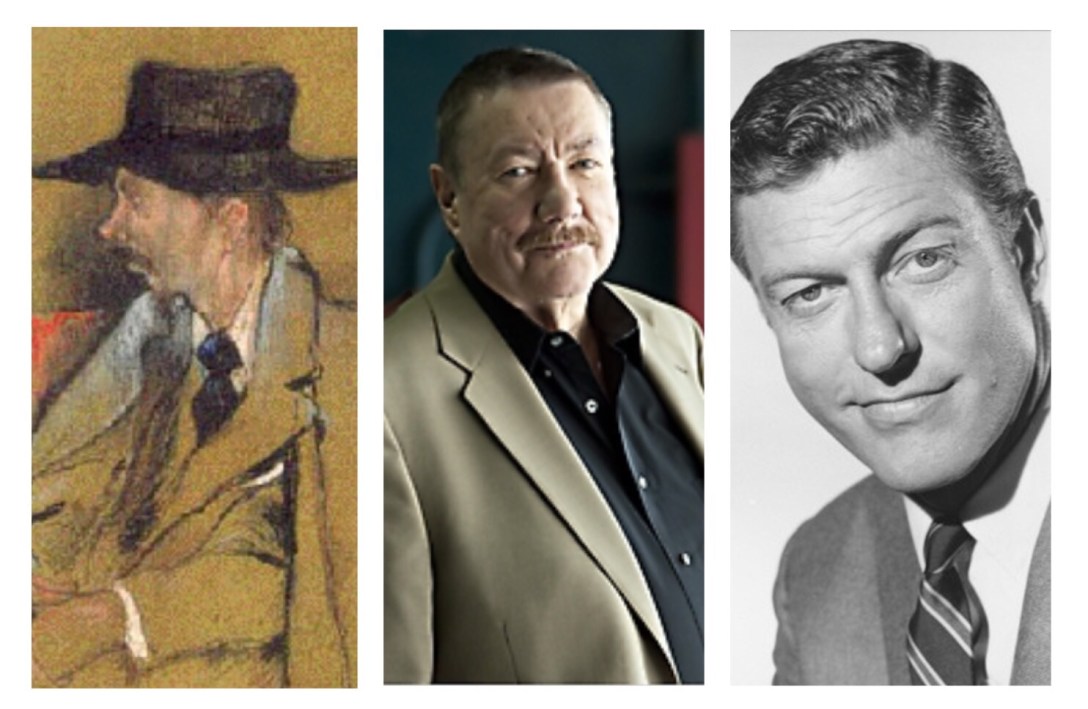
In a 1916 story entitled “Enoch Soames,” Max Beerbohm recounts the tale of a hack poet (Soames) who frets to his friend (Beerbohm) about his inability to enjoy the fame that will assuredly accrue to him posthumously. If only he could step into the Reading Room of the British Museum one hundred years hence: “Think of the pages and pages in the catalogue: ‘Soames, Enoch’ endlessly.”

Of course, the devil happens to be sitting at the next table and offers Soames the chance to do just that in exchange for his soul. Soames zooms to the Reading Room a century ahead. He checks for himself in the card catalogue. Nothing. He checks a few encyclopedias. Nothing. Finally, he finds a book on “English Literature: 1990-2000.” There he finds himself in the following passage: “For example, a writer of the time, Max Beerbohm, who was still alive in the twentieth century, wrote a story in which he portrayed an imaginary character called ‘Enoch Soames’ — a third-rate poet who believes himself a great genius.” History hasn’t forgotten Soames; it fictionalized him. 

This fear for our legacy recurs: Just yesterday I saw an episode of the Dick Van Dyke show that aired in 1963, where the title character — a TV comedy writer — laments, “All I write are jokes. Nothing I write has any real permanence about it. [It is said] on the television once and it’s gone forever.”

Maybe this desire to be remembered is all overblown. Perhaps the late great detective novelist, Robert B. Parker, had it right. When asked how his books would be viewed in 50 years, he replied, “Don’t know, don’t care.”

But in the present he brought great pleasure to many.

Notes

my genre fiction is telling me i should be reading literary fiction

About halfway through Robert Parker’s School Days, the detective Spenser sits down for a drink with his client, the elderly Lily Ellsworth:

“You seem an honest man, sir,” she said.
“‘Let be be the end of seem,'” I said.
She smiled faintly.
“‘The only emperor,'” she said, “‘is the emperor of ice cream.'”
“Very good,” I said.
“My generation read, Mr. Spenser; apparently yours did, too.”
“Or at least I did,” I said. “Still do.”

Here, Spenser is quoting Wallace Stevens’ 1922 poem, “The Emperor of Ice Cream,” and Lily responds with the next line of the poem. The subtext — by my reading — is that in their generations, they read literature. (They’re not, after all, quoting Stephen King or V.C. Andrews.)

Two ironies stand out. The first is that Spenser actually misquotes the original poem; the line is “Let be be finale of seem” (which is less intuitive to the modern ear, but so be it). The second, of course, is that I’m reading this in a pulpy detective novel.

And yet, I adore Parker’s Spenser novels. I don’t read any other writer who matches Parker for witty dialogue. I haven’t read one in a while, and I found this on the free book shelf at the library in a beach town this summer, and reading it was like spending a few hours with a dear old friend. Spenser characterizes himself well: “I am persistent, and fearless, and reasonably smart.”

A few other quotes that I enjoyed:
  • On persistence: “Keeping at it is one of my best things.”
  • On overdoing things: “A thing worth doing…was worth overdoing.”
  • On making do: “It’s a poor workman who blames his tools.”
  • On persistence (II): “I don’t know how smart you are,” he said. “But I’ll give you stubborn.”
  • On expertise in your field and out of your field: “You been a fighter…and you stay in shape, you don’t lose that many fights outside the ring.”
  • On seeking truth: “You probably can’t figure out the truth, if you think you know ahead of time what the truth is supposed to be.”
  • On self-mastery:
“You need to work on your inhibitions,” I said.
“Controlling them?” Rita said.
“No,” I said. “Acquiring some.”