In addition to my reviews of (mostly African) writing here, I’ve been doing some other writing elsewhere. Check it out!
Author: David Evans
Read African Writers: A General Theory of Oblivion, by José Eduardo Agualusa
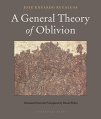
 “I’ve seen things in this city that would be too much even in a dream.” José Eduardo Agualusa’s wonderful novel — A General Theory of Oblivion, translated from Portuguese by Daniel Hahn — feels like a dream, a strange alternative reality from which I didn’t want to stir.
Ludo, a middle-aged Portuguese woman, lives in Luanda, Angola, with her sister and her sister’s Angolan husband. When the war for independence breaks out, Ludo’s sister and brother-in-law disappear and — after an attempted robbery — Ludo locks herself in her apartment. For years. Agualusa leads us through Ludo’s struggle for survival along with a series of other tales that intertwine, some sooner, some later. This is a novel of tragedy and suffering, and it is a novel of dreams and poetry and hope, with just a touch of humor and fantasy mixed in. It is lyrical and surprising and I did not want it to end.
This book was on the shortlist for the 2016 Man Booker International Prize. (It lost to Han Lang’s The Vegetarian, which I liked but not as much as this.) It is inspired by a true story.
A few lines that stayed with me
- “Women have more power, here, than people think.”
- “A man with a good story is practically a king.”
- “God invented music so poor people could be happy.”
- “Our capital is full of mysteries. I’ve seen things in this city that would be too much even in a dream.”
What other reviewers had to say
- Claire Kohda Hazelton, The Guardian: “Beautifully sprawling and poetic.”
- Jane Bradley, The Scotsman: “Agualusa’s writing is a delight throughout, as he opens up the world of Portuguese-speaking Africa to the English-speaking community. And what a world it is.”
- Jeff Bursey, Numero Cinq magazine: “This short novel, written with confidence and poise, contains sharply sketched characters, an evolving and engaging main narrative around Ludo, and years of conflict succinctly summarized and easily understandable.”
- Matthew Lecznar, Africa in Words: “Agualusa creates a rich, moving tale in A General Theory of Oblivion, where people, objects, and memories circulate and collide, and where nothing is ever quite as it seems. It is the story of a community of souls struggling to stay rooted even as legacies of violence threaten to tear them apart.”
- Jennifer Bort Yacovissi, Washington Independent Review of Books: “Agualusa originally wrote this story as a screenplay, and the novel retains that sense of immediacy. Certainly his economy of words heightens its impact.”
- Dustin Illingworth, The Quarterly Conversation: “A General Theory of Oblivion is both more and less than its title; it certainly provides a kind of blueprint of the encroaching obscurity inherent to living and dying—at times bemoaning its certainty, at times celebrating the assured darkness—but it is also a general theory of love, of life, and, finally, of literature. Working in the fertile ground between fiction, philosophy, and enchantment, Agualusa has accomplished something strange and marvelous here, a whirling dervish of joy and pain, blood and memory, whose many high points I found myself re-reading immediately, eager to experience the shine of the prose like spun gold. It left me in awe of these stories we tell ourselves: those we need to survive, those that change us, and those that change with us.”
This is book #17 in my effort to read a book by an author from every African country in 2019.
Read African Writers — The Marriage of Anansewa and Edufa: Two Plays by Efua Sutherland
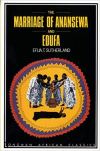
 In 1967, Ghanaian playwright Efua T. Sutherland published Edufa, a play in which the title character, Edufa, seeks to ward off death but accidentally causes his wife Ampoma’s death instead. (There’s a nice synopsis of the play on p53-54 of Nugah’s study.) The story echoes the Greek myth of Alcestis, although I was reminded of at least one aspect of Stephen King’s novel Thinner. I was struck by Ampoma’s speech: “We spent most of our days preventing the heart from beating out its greatness. The things we would rather encourage lie choking among the weeds of our restrictions. And before we know it, time has eluded us. There is not much time allotted us, and half of that we sleep. While we are awake we should allow our hearts to beat without shame of being seen living.”
In 1975, Sutherland published The Marriage of Anansewa, in which Ananse — father of the title character — promises his daughter to four men in order to collect their gifts but then must figure out a way to escape the dilemma. Ananse (or Anansi) stories play a large role in Ghanaian folklore. It’s a fun tale with a clever trickster at the heart of it. As the narrator recommends at the end, “Whether you found it interesting or not, do take parts of it away, leaving parts of it with me.”
I enjoyed reading these two plays (published together), and I recommend reading more about Sutherland’s life as a cultural figure and child right’s advocate here.
This is book #16 in my effort to read a book by an author from every African country in 2019.
Read African Writers — There Is A Country: New Fiction from the New Nation of South Sudan

 South Sudan is the world’s youngest country, gaining its independence from the the Republic of the Sudan in 2011. With impressive speed, editor Nyuol Lueth Tong released this collection of short stories by South Sudanese authors in 2013. With a thoughtful introduction, seven stories, and a poem, the volume comes in at a slim 96 pages, readable in a day. It’s well worth the time. In his intro, Tong highlights that “fiction and poetry can provide a sense of place that readers would otherwise have never been able to imagine” and grapples with the challenge of defining South Sudanese literature in a country with “more than sixty languages” and significant groups of people practicing “local belief systems” along with Islam and Christianity.
The stories provide a lovely, varied picture of the country. In Samuel Garang Akau’s “Light of Day,” we enjoy the playful, awkward back-and-forth of young love in a refugee camp. In Nyuol Lueth Tong’s compelling story “The Bastard,” we see the other end of love, as a woman rejected by the father of her child is pushed into desperate circumstances. John Oryem’s “Potato Thief” may resonate with many readers who told the truth as children, only to be disbelieved and punished for a minor crime they didn’t commit (like the A-Team but in a potato patch). Taban Lo Liyong’s “Lexicographicide” reminds us that fiction is not ethnography with a perplexing, enjoyable, fantastical story about a state-issued dictionary, someone’s diary entries, and “a man who used to dodge taxes by behaving as if he was mad.”
You can read the introduction online here. You can read Victor Lugala’s story “Port Sudan Journal” here. This is book #15 in my effort to read a book by an author from every African country in 2019.
Read African Writers: Nervous Conditions, by Tsitsi Dangarembga
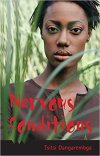
 “I was not sorry when my brother died.” Thus begins Tsitsi Dangarembga’s novel Nervous Conditions, set in Zimbabwe (then Rhodesia) in the 1960s and 70s. Dangarembga’s novel, first published in 1988, comes with distinction: It was “the first novel to be published in English by a black Zimbabwean woman” and is ranked 66 on the BBC’s poll of novels that “shaped mindsets or influenced history.” The novel traces how a preteen girl, Tambu, responds as she consistently faces deep currents of gender inequality, as well as her reactions to European education and culture. Early in the book, Tambu’s parents lack the funds to send both their older children to school, so they send only her brother. Her mother tells her, “When there are sacrifices to be made, you are the one who has to make them.” Tambu, dissatisfied with this state of affairs, decides to grow some maize on a small plot and sell it to finance her own education, to her father’s consternation. This is the beginning of her industrious rebellion. Step by step, Tambu works her way up, but she faces discrimination every step of the way.
We spend a lot of time in Tambu’s head; this book is not driven by action. But ultimately, Tambu’s subtle insurrections and insights she shares merited the read. I look forward to reading the two sequels, The Book of Not and This Mournable Body.
Here is what a few other reviewers had to say:
- Ash, Speaking Across Centuries: “All in all, it was a good read with an interesting perspective I hadn’t before considered. I would not say it was a favorite.”
- M.A. Orthofer, Complete Review: “Nervous Conditions is a powerful work and very fine piece of writing.”
- Alexia Ternate, The Guardian: “This book introduces us to many numerous struggles that women experience… It surely is a must-read book.”
- BookShyBooks: “I wouldn’t call it a page-turner, but it really makes you think about gender and society.”
- Publishers Weekly: “This novel becomes Tambu’s keening–a resonant, eloquent tribute to the women in her life, and to their losses.”
How I used behavioral science to run a marathon
I recently took a few days off between jobs, and I thought, “Hey, it would be fun to run a marathon while I have some time on my hands, just to see if I can!” I haven’t been training for a marathon, but I have been running, and I’ve run long distances in the past.
On the first day of vacation, I jogged from my house to a nearby lake that is about five miles around, figuring I’d do laps until I got to my 26.2 miles. But just after I passed 13 miles, I was out of energy and walked home with only a half-marathon to show for it.
On the last day of vacation, I decided to give it one more try. Now, one of the principles that I’ve learned from behavioral science is the value of commitment mechanisms, whether it’s a savings account that restricts access once you make a deposit (which increased in savings in the Philippines), committing in advance to a financial loss if you don’t quit smoking (which decreased smoking in the Philippines), or letting farmers pre-commit to purchasing fertilizer (which boosted fertilizer use in Kenya).
So I found an 18-mile trail near my house, parked my car at one end, and ran 13.5 miles in one direction. At that point, I had few alternatives to running the 13.5 miles back to my car. It’s true, I could have run the last 5.5 miles to the other end of the trail, but it would have been a pain to get back to my car. I also could have walked, but that just would have meant hours of walking in the cold with a dying phone and few supplies. (This is what Bryan, Karlan, and Nelson call a “soft commitment,” where the consequences are principally psychological rather than economic.) So I jogged back. Slowly, but jogging all the way. I made it back to my car just as my phone told me I’d clocked 27 miles.
Read African Writers: In the United States of Africa, by Abdourahman Waberi
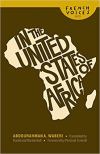
 In Abdourahman Waberi’s novel, In the United States of Africa, the Djibouti-born and US-based writer hypothesizes a world where Africa is the wealthiest continent, with Europe and North America struggling with poverty and conflict. This upending of the current world order reminds this U.S. reader of just how much of his life is the product of historical chance, as the narrator observes that
Today even more than yesterday, our African lands attract all kinds of people crushed by poverty: trollops with their feet powdered by the dust of exodus; opponents of their regimes with a ruined conscience; mangy kids with pulmonary diseases; bony, shriveled old people. People thrown into the ordeal of wandering the stony paths of exile. People facing their own filth, all cracked inside, a crown of nettles in place of a brain.
Or, when a character dares to visit the dangerous land of France, she sees — outside her hotel — “little blonde girls in want of customers offer up their thighs of orphaned sirens to the caresses of the wind.” In another chapter, from the perspective of the Europeans
Us, wanting and desiring, and begging to drink, eat, be nourished, live, urinate, defecate, belch, and even bathe in the blood of the industrial slaughterhouses of fat Africa, devoted to fitness and facelifts.
Besides this weighty content, the Waberi winks at us from time to time with familiar names, adapted to their African parallels: McDiops for fast food, Sarr Mbock’s for coffee, Hadji Daas for ice cream, and Haile Wade for movie productions.
This is all good. What I wished for was more plot, more action. The book is written as a series of letters, mostly to a young woman, Maya, born in France but adopted by Africans and rescued from her life of poverty. But not much actually happens, besides a visit to her hometown to find her birth mother towards the very end. So despite being just 123 pages, the limited movement made it more of an effort for me to get through. But I’m glad I read it. The translators from the French, David and Nicole Ball, employ a rich vocabulary that had me scurrying delightedly to my dictionary every few pages.
A few passages that stood out to me:
-
On travel writers: “You’re neither a tourist nor an ethnologist, still less one of those so-called travel writers who traipse all over the planet in search of utopias, heavenly oases, and stories to steal.”
-
On sculpture: “Of all the plastic arts, sculpture is the one that goes furthest in the imitation of divine creation. At the beginning was the emotion embodied in the clay.”
-
On uselessness: “As useless as the king in an incomplete deck of cards”
What other reviewers had to say:
-
M.A. Orthofer, The Complete Review: “Waberi’s ‘United States of Africa’ makes for a marvelous and highly entertaining — and thought-provoking — backdrop, but the narrative itself is less sure-footed… If not an entirely successful work of fiction, the short In the United States of Africa is nevertheless well worth reading.”
-
Sofia Samatar, Islam and Science Fiction: “There’s a certain amount of glee in this reversal of stereotypes, but the novel is more than just an extended joke. It is, itself, a mirror. In its pages, a reader of any background will see herself or himself reflected in the body of the other.”
-
Peter Wuteh Vakunta, Journal of the African Literature Association: “Abourahman’s…masterpiece is undoubtedly In the United States of Africa.
-
Ryan Michael Williams, PopMatters: “Despite the fact that neither plot nor characters seem especially important to Waberi, his considerable ability as a stylist helps keep his novel consistently engaging. In David and Nicole Ball’s translation, Waberi’s prose reads as both riotously funny and lyrically lush, offering big laughs as well as multifaceted subtleties of expression.”
-
The African Book Review: “Brilliant and short yet written with an elegant simplicity that belies great depth, it’s a novel aimed for the critical thinker in all of us.”
-
Publishers Weekly: “Waberi manages to convince of the power of art and love to heal very real rifts.”
-
Three Percent: “This novel is not perfect, but it is imperfect in a very acceptable and forgiving way. The lofty aim and the mechanics Waberi uses emphasize his talent as a writer and his responsibility as a writer. To make us think in a different way about the world we live in, but rarely question. For moral integrity alone, this book deserves to be on the longlist.”
This is book #13 in my effort to read a book by an author from every African country in 2019.
A simpler way to communicate learning results
I have a new paper with Fei Yuan on how to communicate learning results more accessibly than in standard deviations. Here’s the paper. Here’s a summary blog post.
Here are the abstract and title of the paper:
Equivalent Years of Schooling: A Metric to Communicate Learning Gains in Concrete Terms
Abstract: In the past decade, hundreds of impact evaluation studies have measured the learning outcomes of education interventions in developing countries. The impact magnitudes are often reported in terms of “standard deviations,” making them difficult to communicate to policy makers beyond education specialists. This paper proposes two approaches to demonstrate the effectiveness of learning interventions, one in “equivalent years of schooling” and another in the net present value of potential increased lifetime earnings. The results show that in a sample of low- and middle-income countries, one standard deviation gain in literacy skill is associated with between 4.7 and 6.8 additional years of schooling, depending on the estimation method. In other words, over the course of a business-as-usual school year, students learn between 0.15 and 0.21 standard deviation of literacy ability. Using that metric to translate the impact of interventions, a median structured pedagogy intervention increases learning by the equivalent of between 0.6 and 0.9 year of business-as-usual schooling. The results further show that even modest gains in standard deviations of learning — if sustained over time — may have sizeable impacts on individual earnings and poverty reduction, and that conversion into a non-education metric should help policy makers and non-specialists better understand the potential benefits of increased learning.
Read African Writers — The Sea-Migrations: Tahriib, by Asha Lul Mohamud Yusuf
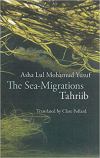
 Asha Lul Mohamud Yusuf writes powerful, evocative poetry. She fled civil conflict in Somalia in 1990 and emigrated to the UK. In her brief collection (just 17 poems) — The Sea-Migrations: Tahriib, with the original Somali poems on the left and the English translations on the right, Yusuf traverses despair about Somalia’s ongoing conflicts, the importance of journalists, love, and — repeatedly — frustration with Somalia’s leaders and longing prayers for better representatives. Like much good poetry, much of what she writes both applies to Somalia’s challenges and transcends them. When she writes, in “The Writer’s Rights,” that
Journalists were jailed…
Injustice is infectious,
your children are not safe,
your elders are not safe,
they will wipe out your women.
I was reminded of German pastor Martin Niemöller’s poem, “First they came for the socialists, and I did not speak out– Because I was not a socialist…”
In “Thirst,” when she writes of
This man we selected
to…serve as our ruler
turns out to be shoddy
with a squirming brain
and a slumbering conscience
who can’t refrain from causing shame.
I couldn’t help but think of other countries who have turned to boorish, embarrassing leaders in recent years. And, much more locally, when she writes in “The Scab” that “I’m not prepared to give you a poem which is a half-empty milk-vessel full of unsealable holes,” I remembered how I feel when people ask for early versions of my own writing.
Of course, translations — especially poetry translations — are an art of their own. Clare Pollard, a skilled poet in her own right, has translated these, with input from Said Jama Hussein and Maxamed Xasan ‘Alto’. Her introductory essay on the translation process is fascinating in its own right, as is Sarah Maguire opening essay on how Yusuf fits into Somalia’s rich poetic tradition. Don’t miss the glossary at the end, either!
You can listen to both the original Somali and the English translation of one of the poems — “Disorientation” — read by Yusuf and Pollard here.
Here is what a few other reviewers had to say:
Maria Castro Domínguez, Mslexia: “Asha Lul Mohamud Yusuf´s poetry collection The Sea-Migrations Tahriib is an exhilirating exploration of Somalia, its culture, its nature, its politics and its people; all conjured by Asha´s shining language creatively translated with an update style by another brilliant poet, Clare Pollard, which brings it much closer to the reader. The original poems and their translation sit side by side allowing us to capture form, space and sound –so essential to poetic meaning- all at once. Both poets make magic together.”
Momtaza Mehri, Poetry London: “The Sea-Migrations is a narratively fertile collection that confronts the silences of national traumas. In these poems, grief announces itself. Yusuf, however, is never exploitative or gratuitous in her depiction of the violence of refugee life. Her verses are imbued with an unswerving responsibility to honour the suffering of her people… The Sea-Migrations is a compelling addition to the growing canon of diasporic Somali voices as well as a powerful reminder that exile is something generations of refugees carry with them, whether they want to or not.” (There’s a lot of useful analysis in this review.)
Jeremy Noel-Tod, The Times: “Sometimes a book reminds us of poetry’s real electric force in the world. Yusuf is a brilliant young Somali poet living in exile in London, who takes ‘history’s point/to ink a beautiful literature.’… Translated into lapel-grabbing alliterative verse by Clare Pollard, these piercingly direct poems throw open a window onto a war-torn country and its wretchedly displaced people.”
Carol Rumens, The Guardian: “Performance poetry often dies on the page. But the work of Somalian poet Asha Lul Mohamud Yusuf is an exception, strengthened by a highly craft-conscious, perhaps troubadour-like, oral culture. Though the rhetoric is impassioned and the diction down-to-earth, there are no simplistic politics lectures in her dual-language, Somali-English collection.”
Read African Writers: The Attack, by Yasmina Khadra
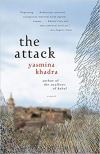
 Dr. Amin Jaafari is a surgeon. He is an Arab and a naturalized Israeli citizen. He and his wife live a happy, secular life. One day, he finds out that his wife has blown herself and a fast food restaurant filled with schoolchildren up in a suicide bomb attack. In Yasmin Khadra’s The Attack, Dr. Jaafari seeks answers both within himself and from members of Arab community in Israel. In the process, Khadra — originally from Algeria — shines a light on the enduring Arab-Israeli conflict. I found this book illuminating and often engaging. The pacing slowed in the middle, and occasionally I wished for a little less thinking and a little more action. But ultimately, the insights and an occasionally lovely turn of phrase — I “stare unwaveringly at the opalescent streaks gently lifting the horizon’s coattails” at sunrise — won me over. I enjoyed John Cullen’s English translation and Stefan Rudnicki’s narration of the audiobook.
Here are some passages that stood out to me:
-
On violence: “The only battle I believe in is the battle the surgeon fights, which consists in recreating life in the place where death has chosen to conduct its manoeuvres.”
-
On the motivations of terrorists: “I think even the most seasoned terrorists really have no idea what has happened to them. And it can happen to anyone. Something clicks somewhere in their subconscious, and they’re off. Their motives aren’t all equally solid, but generally, whatever it is, it comes over them like that… Either it falls on your head like a roof tile or it attaches itself to your insides like a tapeworm. Afterward, you no longer see the world the same way. You’ve got only one thing on your mind: the thing that has taken you over, body and soul.”
-
On God: “I couldn’t bring myself to accept the notion that God could incite his subjects to take up arms against one another and reduce the exercise of faith to an absurd and frightening question of power relationships.”
-
On dreams: “He who dreams too much forgets to live.”
Here are some other reviews:
-
The Complete Review: “The final truth, and all the consequences are fairly well handled, and the novel packs a decent punch by the end.” (The Complete Review also excerpts a number of other reviews.)
-
James Buchan, The Guardian: “With the exception of Dr Yehuda, Moulessehoul’s Jews are louts. His Arabs strike heroic poses. There is none of that peculiarity of place, person and history that you find in an Israeli Arab writer such as the late Emile Habiby.”
-
Janet Maslin, New York Times: “painfully acute observations of Arab-Israeli strife… This book is also gripping and dynamic in ways that rivet the reader even when the thinking is didactic and the prose takes a purplish turn.”
-
Publishers Weekly: “Khadra…turns his attention to the Israeli-Palestinian conflict in this moving novel unlikely to satisfy partisans on either side of the issue.”
-
The New Yorker: “Khadra’s writing has a tendency toward cliché, but the book’s dark vision of the conflict is powerful.”
This is book #11 in my effort to read a book by an author from every African country in 2019.
 David Evans' personal blog