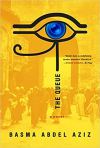
Read African Writers: The Queue, by Basma Abdel Aziz

the queueegyptWelcome to a totalitarian regime with a byzantine bureaucracy that centers on one very long queue. Basma Abdel Aziz’s beautiful and maddening tale features Yehya, a man who was shot during a series of unnamed “disgraceful events.” In order to get surgery to remove the bullet — or to obtain any of a mass of services — he and thousands of others have to go and wait in line (the queue). People sleep in the queue. “Everyone expected the queue to move at any minute, and they wanted to be ready.” Yehya’s friends try to circumvent the bureaucracy, but the results are frustrating at best and violent at worst.

In the midst of all this, certain “riffraff” begin agitating for change, but most of those in the queue wish they would go away. “Life in the queue had been relatively orderly and stable before the Riffraff’s arrival; there were recognized rules and limits, which everyone accepted and everyone followed.” Better the gridlock you know than the upheaval you don’t?

Elisabeth Jaquette translated the book into English, and Mark Bramhall narrates the competent audiobook.

Highly recommended.

Here are a couple of other bits:
  • On official government statistics: “Those conducting the poll had therefore decided not to conduct one again. To simplify matters, they would announce the previous poll’s results on a set yearly date.”
  • On obtaining documents from the government: “Obtaining any document from that place was like plucking a piece of meat from the mouth of a hungry lion.”
  • On addressing symptoms rather than causes of problems: “Officials were investigating the possibility of placing parasols near places of heavy traffic, to calm citizens’ nerves and reduce their irritability.”
If I haven’t convinced you, check out what these other reviewers have to say:

Carmen Maria Machado, NPR: “The Queue is the newest in this genre of totalitarian absurdity: helpless citizens — some hopeful, some hopeless — struggling against an opaque, sinister government, whose decrees, laws, propaganda, and red tape would be comical if they weren’t so deadly serious.”

Pasha Malla, Globe and Mail: “Basma Abdel Aziz’s novel is not simply an exegesis on the state of her homeland, but a much more universal evocation of the relationships between hegemonic power and grassroots dissent. It feels both fitting and faintly tragic that she had to resort to the literature of dark fantasy to convey it.”

Publishers Weekly: “At its best, the novel captures a sense of futility and meaninglessness, but its impersonal tone and uneventful middle contribute, at times, to a lack of urgency.”

Read African Writers: The Shining Girls, by Lauren Beukes

Shining GirlsSouth AfricaTime traveling serial killer! In South African writer Lauren Beukes’s thriller, a drifter from 1930s Chicago discovers a house with a murderous agenda. (That aspect reminded me of David Mitchell’s Slade House.) Beukes takes us back and forth in time, narrating from the perspective of Harper, the killer, and his various victims. Some of them don’t go quietly. The ending includes delightful ambiguity. Along the way, we can see ourselves in the characters’ exchanges.
“I’m scared, Mom.”

“We all are,” Rachel says. … “Shhh. It’s okay, honey. It’s all right. That’s the big secret, don’t you know? Everyone is. All the time.”

This was a quick, exciting read, based on enormous research about the city of Chicago, as Beukes lays out in her note at the end.

Bits and pieces:

  • As another entry of economists in popular culture, one of the victims is studying economics as Northwestern University and police find “Fundamental Methods of Mathematical Economics” in her backpack. Remember that Rachel Chu of Crazy Rich Asians also studied economics at Northwestern. I wonder if they knew each other?
  • “The problem with snapshots is that they replace actual memories. You lock down the moment and it becomes all there is of it.”

Here is what a few other reviewers had to say:

  • Alan Cheuse, NPR: “Beukes has done tremendous research about the long span of Chicago time in which her story occurs, and carefully constructed the eccentric and brilliant plot.”
  • Ben Hamilton, The Guardian: “The killing is so brutal and pitiless that it threatens to overwhelm the rest of the novel… This is an entertaining novel that will be read with keen attention, but the reader may end up slightly confused by the meaning of it all.”
  • Janet Maslin, New York Times (and this is a great review overall): “Once Ms. Beukes gets her chronological tricks working at full blast, Harper’s [the killer’s] methods become maddeningly effective.”
  • Publishers Weekly: “Beukes is particularly good at garnering sympathy for Harper’s female victims, creating deep characterizations in only a few pages, so that they come across as more than just fodder for a psychopath’s mission.”

This is book #7 in my effort to read a book by an author from every African country in 2019.

Read African Writers: Woman of the Ashes, by Mia Couto

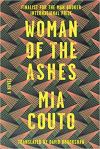
woman of the ashesmozambiqueMia Couto’s Woman of the Ashes — a historical novel — recounts a conflict in the closing days of a major African empire. In the late 19th century in what is now Mozambique, the empire (called the “state of Gaza”) resists the rule of the Portuguese. Imani, the novel’s protagonist, is a fifteen-year-old girl who acts as interpreter for the Portuguese military representative as conflict is imminent. Her family is torn, as one of her brothers fights for the Portuguese and the other for the African empire and as her . This is the first book in a trilogy: the second book is already out in Portuguese. David Brookshaw produced the English translation of Woman of the Ashes. I listened to the audiobook (narrated by Bahni Turpin and Joel Richards) and sometimes got a little lost in the plot, but the prose was gorgeous. Here are a few lines that stood out:

  • “Before long our nation will be a jumble of scars, a map forged by so many blows that we shall be more proud of the wounds than of the unblemished body we may yet save.”
  • “The difference between war and peace is as follows: in war, the poor are the first to be killed; in peace, the poor are the first to die. For us women, there’s another difference too: in war, we get raped by those we do not know.”
  • Men “are scared when women talk, and even more scared when women stay silent.”
  • “To describe the decrepit building as a ‘barracks’ can only stem from some huge distortion that fails to distinguish between fact and desire.”
  • “My father was a tuner of the infinite marimba that is the world.”
  • “Some of us humans share the same fate: we die inside, and are only held together by our similarity to the living we once were.”
  • “Wars never begin. When we awaken to them, we realize they started long ago.”
  • “War is a midwife: from the insides of the world, it causes another world to emerge.”
  • “Dark memories are like an abyss: no one should lean too far over them.”

Filipe Nyusi, current president of Mozambique, said this of the book: “It is better for us to awaken the ghosts than for the ghosts to awaken us.” (Actually, he said, “Mais vale sermos nós a despertarmos fantasmas que fantasmas a despertarem a nós.”)

Here is what a few other reviewers had to say:
  • Publishers Weekly: “a fascinating, intricate story”
  • Sheila Glaser, New York Times: “Couto conjures what he has described as the ‘many and small stories’ out of which history is made, offering a profound meditation on war, the fragility of empire and the ways in which language shapes us.”
  • Kirkus Review: “A rich historical tale thick with allegory and imagery that recalls Marquez and Achebe.”
  • Daniel Bokemper, World Literature Today: “A beautiful and grotesque force interweaving history with myth.”
  • Luísa Gadelha, Diario Centro do Mundo: “A leitura vale a pena tanto pelo prazer literário quanto pelo resgate histórico de Moçambique.”
  • Caíque Gomez, Poltrona Vip: “Mia Couto mistura história, mito e magia para narrar os horrores da guerra com uma linguagem muito poética, característica marcada do autor, como se ele quisesse nos reconfortar de alguma maneira, como se dentro desses horrores, ele nos devolvesse o humano.”
I plan to read (or listen to) the next book when it makes its way into English.
By the way, check out the Brazilian (left) and Portuguese (right) covers of the books. They win!

What I’ve been reading

January was a productive month for reading! Poetry, graphic novels, prose novels, it’s all here!

barracoonBarracoon: The Story of the Last “Black Cargo,” by Zora Neale Hurston — Back in the 1930s, Hurston intervewed the last surviving person who had been brought from Africa as part of the slave trade, Cudjo Lewis. In his own vernacular, Hurston tells his story. An amazing window into a piece of African and American history.
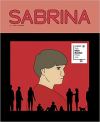
sabrinaSabrina, by Nick Drnaso — Sabrina was on 7 “best graphic works of 2018” lists, more than any other book. A man’s girlfriend disappears, and an old high school friend takes the desolate man in. The deserted man spends his days listening to “Infowars”-style talk radio. The friend deals with having lost his family. It’s all dread and hopelessness. It was good but it didn’t bowl me over. (Drnaso writes in a very small font, which I find distracting.)

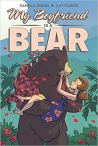
my boyfriend is a bearMy Boyfriend Is A Bear, by Pamela Ribon, art by Cat Farris — A twentysomething woman in a terrible job ditches the last in a series of terrible boyfriends — the sequence on previous boyfriends is hilarious — and starts dating a bear that wandered out of the mountains during the California wildfires. Can their love overcome hibernation season? And the fact that the guy is a bear? Sweeter and less weird than it sounds, but it still a little weird. Author was a screenwriter for Moana and Ralph Breaks the Internet. The art is sunny and fun. [Content: Some adult language, but that’s about it.] This from Publisher’s Weekly: “Ribon’s use of magical realism is a delight from cover to cover, as she cleverly navigates the foibles of millennial dating and friendships. Farris’s cartooning is as expressive as it is adorable, inviting the reader to share Nora and the bear’s intimacy with every panel. This resonant, absurdist modern fable is a joyful discovery.” On 2018’s “best graphic works” list.

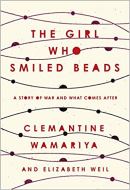
the girl who smiled beadsThe Girl Who Smiled Beads: A Story of War and What Comes After, by Clemantine Wamariya and Elizabeth Weil — Wow. Clemantine Wamariya was just six when the Rwandan genocide took place. Separated from the rest of her middle class family, she and her teenage sister Claire traverse several countries, in and out of refugee camps. Eventually they make it to the USA. The book gives a devastating portrait of how conflict and being a refugee can affect a child, and how a young woman seeks to make sense of her experience, including through literature, from Elie Wiesel to W.G. Sebald. Beautiful and gripping and thoughtful. Highly recommended. (More from me on this here.)
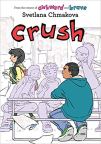
crushCrush, by Svetlana Chmakova — This is the third book in Chmakova’s series taking place at Berrybrook Middle School, but you can read them in any order. This and the previous — Brave — are my favorites. She captures the emotion of middle school just wonderfully and introduces us to sweet and not-so-sweet kids, trying to get through the day.

small countrySmall Country, by Gaël Faye — Rwanda’s neighbor to the south, Burundi, gets far less attention but also has a deeply troubled history. Faye, born and raised in Burundi to a French father and a Rwandan refugee mother, gives a glimpse at life over the course of coups, civil war, and stealing mangos with the neighborhood boys in this autobiographical novel. Beautifully written and very evocative. (More from me on this here.)

bingo loveBingo Love, by Tee Franklin, illustrated by Jenn St-Onge and Joy San — This brief graphic novel tells the story of two African American women who fall in love in the 1960s but lose each other and don’t meet again for decades. Sweet, but a bit too brief to plumb the emotional depths. I was sympathetic to some (not all) of the critiques made in this review. Still, a likable story that fills a gap in representation.

china rich girlfriendChina Rich Girlfriend, by Kevin Kwan (narrated by Lydia Look) — Rachel Chu finds her father! Mayhem ensues. Crazy, silly fun. Some awesomely bizarro plot twists towards the end.

what it means when a man falls from the skyWhen It Means When a Man Falls from the Sky, by Lesley Nneka Arimah — I listened to this book last year and loved it. I just re-listened to it and found it just excellent. Mostly realist, with an occasionally bit of fantasy sprinkled in to explore deeper truth. Arimah creates captivating worlds. (More from me on this here.)
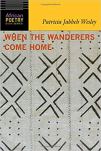
when the travelersWhen the Wanderers Come Home, by Patricia Jabbeh Wesley — Wesley returns to her homeland of Liberia and characterizes it in this collection. Beautiful, tragic reflections of the legacy of war (and lots of other stuff, too). (More from me on this here.)

the boy who harnessed the windThe Boy Who Harnessed the Wind: Creating Currents of Electricity and Hope, by William Kamkwamba and Bryan Mealer (narrated by Chike Johnson) — A young man in Malawi has to drop out of secondary school for lack of funds, but with an interest in electronics, access to a library, and incredible tenacity, he builds a windmill to generate electricity for his family. True story. (More from me on this here.)
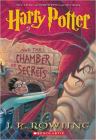
harry potter and the chamber of secretsHarry Potter and the Chamber of Secrets, by J.K. Rowling — Lockhart is a fun character, but the kids make some truly stupid choices toward the end, which lessened my enjoyment of the book.

how to be a supervillainHow to Be a Supervillain, by Michael Fry — Victor is the son of second-rate supervillains (maybe just villains?), who apprentice him with another supervillain. The only problem? Victor is fundamentally good. This is light and silly fun. My favorite part was all the kooky minor supervillains and superheroes that come up (as in that old movie Mystery Men). I read it with my sons.


Read African Writers — The Boy Who Harnessed the Wind, by William Kamkwamba and Bryan Mealer

the boy who harnessed the windmalawiIn this memoir, a young man in Malawi has to drop out of secondary school for lack of funds. But with his interest in electronics, access to a modest library, and incredible tenacity, he builds a windmill to generate electricity for his family. The story is inspiring, and it’s not surprising that a movie is coming out soon:


Over the course of the memoir, Kamkwamba gives insight to a range of issues that he and those he loves have faced: surviving a famine, adolescent marriage, getting sent away from school for not having a uniform, having to reduce meals in times of food insecurity, and the HIV crisis (documented in Kim Yi Dionne’s book Doomed Interventions).

I have a couple of quibbles with the book, which necessarily entail spoilers. So if you don’t want those, stop reading now! None of them mean that you shouldn’t read the book. But if you have read the book, I’d be interested in your take.

First, after Kamkwamba builds his windmill and continues to innovate, he ultimately gets “discovered,” first by local media and later by tech types from the U.S. These Westerners sponsor Kamkwamba so that he is able to provide a more stable life for his family and pay the school fees of several of his friends. Kamkwamba goes on to study at elite schools. I’m very happy for him, and I enjoyed hearing about his adventures. But I’m personally less interested in these tales that ultimately hinge on Western charity. (Again, this isn’t a critique of Kamkwamba’s story! It’s just a comment on the kinds of stories I’m most excited to read.)

Second, in the final pages of the book, Kamkwamba calls his fellow Africans to courage: “My fellow students and I talk about creating a new kind of Africa, a place of leaders instead of victims, a home of innovation rather than charity. I hope this story finds its way to our brothers and sisters out there who are trying to elevate themselves and their communities, but who may feel discouraged by their poor situation.” Kamkwamba showed amazing ingenuity and tenacity, but ultimately what pulled him out of poverty was charity. The Western donors weren’t investing in his windmill; they wanted to help out an inspiring kid. I’m glad they did! The story tells us a lot about hard work, but I’m not sure what it tells us about elevating oneself and “innovation rather than charity” (emphasis added).

The audiobook is well read by Chike Johnson. In the ebook — but not the audiobook — there’s a nice epilogue (“about the book”) in which Kamkwamba describes what has happened in his life since the book was published. It seems like he’s doing lots of great work in Malawi and beyond.

This is book #5 in my effort to read a book by an author from every African country in 2019.

Read African Writers — When the Wanderers Come Home, by Patricia Jabbeh Wesley (Liberia)

when the travelersliberiaBorn, raised, and educated through university in Liberia, Jabbeh Wesley has lived in the U.S. for much of her adult life. In 2013, she returned to Liberia for four months, giving birth to much of her most recent poetry collection, When the Wanderers Come Home. With powerful imagery, she describes revisiting the land of her youth, now at peace but still struggling after years of civil war. (This was before the massive Ebola crisis made it to Liberia in 2014.)

In “So I Stand Here,” Jabbeh Wesley characterizes the foreignness of returning home:

I do not know these people
who have so sadly emerged out of the womb
of war after the termite’s feasting.

In “When Monrovia Rises,” she underlines the fear that pervades countries with recurring conflicts:

Everyone here barricades themselves behind steel
doors, steel bars, and those who can afford also

have walls this high. Here, we’re all afraid that one of us may light a match and start the fire again

Not all the poems are specific to post-war Liberia. In “I Need Two Bodies,” Jabbeh Wesley longs for one body to work and to fight through life, and another to rest and to sleep. In “July Rain,” she muses on the role of rain in justifying life choices: “If the rain would stop, we | would stop making babies, they say.” (Of course, as a microeconomist, I ask, Has anyone studied this? I’ve seen work on power outages and fertility and on television ownership and sexual activity, but not on rainfall.)

Here are what a couple of other critics have to say about the book:

Bidisha SK Mamata, Liberian Listener: “At heart When the Wanderers Come Home is a grieving love letter to Liberia, a country that contains her story just as she tries to contain all its stories… Despite the brokenness of what she describes, Wesley’s poetic form is smooth and steady, the neat stanzas and non-rhyming couplets capably containing the most shocking revelations.

Matthew Shenoda, World Literature Today: “In Wesley’s poetry we see the immense power of a poet working to express the human complexity and grief of a nation and her people often defined by war.”

This is book #4 in my effort to read a book by an author from every African country in 2019.

Read African Writers: What It Means When a Man Falls from the Sky, by Lesley Nneka Arimah (Nigeria)

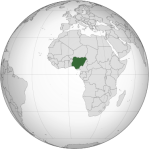
what it means when a man falls from the skynigeriaLesley Nneka Arimah’s debut collection of short stories is a revelation. I first listened to the audiobook  — beautifully narrated by Adjoa Andoh — a year ago, and I’ve just re-listened to it. The stories take place in Nigeria, in the U.S., in both. If I had to pick a theme, I’d pick loss, and Arimah explores every cave and crevice extending from that starting point.

Here are a few lines that struck me:

  • The U.S., a “country that rewards her brand of boldness, in her black of body, with an incredulous fascination that makes her put it away” (from the story “Light”).
  • A father and his daughter: “He does not yet wonder where she gets this, this streak of fire. He only knows that it keeps the wolves of the world at bay and he must never let it die out” (in “Light”).
  • “Joy had become a finite meal she begrudged seeing anyone but herself consume” (in “Glory”).
  • Turning 50, from the perspective of a child: “Mrs. Ajayi was very old, creeping on that age when life begins to lose all meaning, fifty, I think” (in “Redemption”).

Here is the effusive review that I wrote when I first listened to the book:

A breathtaking collection of stories. The prose is beautiful; it made other books I read or listened to at the same time seem pedestrian. Some of the stories are realistic, others incorporate magical realism. Some take place in Nigeria, others in the U.S., other in both. I’d read a novel by Arimah on any of these stories. One woman observes about her boyfriend: “He didn’t seem to mind how joy had become a finite meal she begrudged seeing anyone but herself consume.” Or a father comments on his daughter: “He should chastise the girl, he knows that, but she is his brightest ember and he would not have her dimmed.” As Marina Warner wrote in the New York Times, “It would be wrong not to hail Arimah’s exhilarating originality: She is conducting adventures in narrative on her own terms, keeping her streak of light, that bright ember, burning fiercely, undimmed.”

At the time of this writing, the ebook on Kindle is available for US$1.99, which is wildly high literary value-for-money.

This was book #3 in my effort to read a book by an author from every African country.

Read African Writers: Small Country, by Gaël Faye (Burundi)

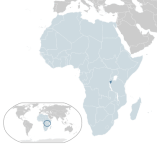
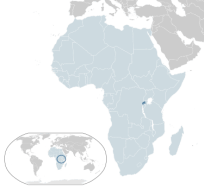
small countryburundiMy second book in my effort to read a book by an author from every African country is Gaël Faye’s Small Country. Faye was born and raised in Burundi to a French father and a Rwandan refugee mother. At age 13, he fled to France. Small Country is an autobiographical novel, drawing on Gaye’s childhood experiences.

Here’s my quick take:

Rwanda’s neighbor to the south, Burundi, gets far less attention but also has a deeply troubled history. Faye, born and raised in Burundi to a French father and a Rwandan refugee mother, gives a glimpse at life over the course of coups, civil war, and stealing mangos with the neighborhood boys in this novel. Beautifully written and very evocative, Sarah Ardizzone delivers a lyrical translation into English.

Here are two passages that stood out to me. The first is on the morning of a coup.

I discovered that it was traditional to play classical music during a military coup. On November 28, 1966, for Michael Micombero’s coup, it was Schubert’s piano sonata No. 21; on November 9, 1976, for Jean-Baptiste Bagaza’s coup, it was Beethoven’s 7th symphony; and on September 3, 1987, for Pierre Buyoya’s coup, it was Chopin’s Bolero in C major. On this day, October 21, 1993, we were treated to Wagner’s Twilight of the Gods.

And the other is on genocide, recounted after his mother returns from trying to locate her loved ones after the Rwandan massacre.

Genocide is an oil slick: those who don’t drown in it are polluted for life.

Highly recommended. The audiobook is well narrated by Dominic Hoffman.

My #ReadAfricanWriters challenge for 2019

This year I plan to read a book by an author from every country across Africa. That’s 54 countries. I’ll blog and tweet about it under the hashtag #ReadAfricanWriters. You can also follow my progress on this map.

And here’s my first entry for the year, a memoir by an author from Rwanda!

the girl who smiled beadsrwandaThe Girl Who Smiled Beads: A Story of War and What Comes After, by Clemantine Wamariya and Elizabeth Weil.

Here’s my quick take:

Wow. Clemantine Wamariya was just six when the Rwandan genocide took place. Separated from the rest of her middle class family, she and her teenage sister Claire traverse several countries, in and out of refugee camps. Eventually they make it to the USA. The book gives a devastating portrait of how conflict and being a refugee can affect a child, and how a young woman seeks to make sense of her experience, including through literature, from Elie Wiesel to W.G. Sebald. Beautiful and gripping and thoughtful. Highly recommended.

Here’s how the publisher describes the book:

Clemantine Wamariya was six years old when her mother and father began to speak in whispers, when neighbors began to disappear, and when she heard the loud, ugly sounds her brother said were thunder. In 1994, she and her fifteen-year-old sister, Claire, fled the Rwandan massacre and spent the next six years migrating through seven African countries, searching for safety—perpetually hungry, imprisoned and abused, enduring and escaping refugee camps, finding unexpected kindness, witnessing inhuman cruelty. They did not know whether their parents were dead or alive.

The book also made it onto the Washington Post’s list of notable books for 2018.

How to read a lot of books

In 2018, I read or listened to 104 books. That’s high for me, but I consistently go through dozens of books in a year. Here are some steps I take to help me go through a lot of books and to get the most out of them.

How to read a lot of books

Read in all formats. About half of the books I consumed in 2018 were audiobooks. Another 16 books were ebooks, which I read on my smartphone. And the rest were traditional print books. Consistently having a book in each format means that I can always be reading. Have to wait in a lone line? Read the ebook on my phone! Have to jog out to the car to get something? Squeeze in a few minutes of my audiobook! Have a few minutes before going to sleep? Push through a few pages of my print book!

Each of these formats has its advantages. Ebooks make it much easier to copy passages I love for future reference.  “Audiobooks add literacy to moments where there would otherwise be none,” as psychologist Daniel Willingham has written. Furthermore, when I’m reading a book that takes place in culture distinctive from my own, and the audiobook narrator can represent the accent accurately, the experience is richer. Nowadays, some audiobooks have a full cast, so it’s like a theater in your ears.

Audiobooks are also good for helping me to push through big nonfiction books that I mightn’t otherwise find time for. People say to me, “But I retain less from audiobooks.” That’s probably true for me too, but I’d much rather have 50% [made-up number] of a great book that I listened to than 0% because I was hoping eventually I’d read it but never found time. I also take steps to enhance retention from audiobooks — more on that below.

Many public libraries in the United States have an app which will let you download free audiobooks, like Overdrive. There are also apps you pay for, like Audible. (Here’s my post on getting started in audiobooks.)

With audiobooks, experiment with faster speeds. A few years ago, a friend told me he was listening to books at double speed. I thought, that’s insane! Where’s the pleasure in that? How can you even follow along? So I tried 1.25 speed. It sounded a little fast, but I got used to it, so much so that regular speed started to sound…very…slow… Then I upped to 1.5 speed. And so on. Now my default is double speed. If I’m listening to a book with a narrator with an unfamiliar accent, I slow it down. Same with a book with particularly difficult content — e.g., a technical economics argument or a physics explanation. But with a high speed default, I go through a lot of content.

Shift focus to books rather than movies. Early in 2018, I deleted Youtube and Netflix apps from my phone, and I deleted my normal pop culture podcasts. I replaced them with book podcasts, like the New York Times Book Review podcast and Bookworm. So instead of hearing about movies I wanted to see, I was hearing about books I wanted to read or listen to. (I still saw a lot of movies, and I eventually re-downloaded Netflix because that’s how much self control I have. But it was a strong start.)

How to get the most out of the books you consume

Of course, my goal isn’t just to get through lots of books. I also want to get the most out of the books I’m reading. Here are some steps I take to do that.

Talk about books with other people. Discussing the books I’m reading opens new perspectives and clarifies my own views. I participate in two book clubs, where I chat with friends about great books. One meets at lunchtime during the workday, once every month or two. (You have to eat lunch, right?) Another meets on a weekend evening. I also chat with friends on social media about the books I’m reading.

Some friends and I created a shared Google Sheet on which we each record our books (and movies) for the year, so we can get recommendations from each other and talk about the books that we’ve both read. (For the competitive among us [me], it also fosters a desire to keep reading.)

Another, less literal way of doing this is to read professional review of the book, after I’ve read the book. Great reviewers can often capture what I’ve been thinking but express it more lucidly, saving me the trouble of wordsmithing the perfect characterization.

Make notes. For every book I read, I create a note in my note-taking app (Evernote). If I’m reading a print book, I’ll sometimes take a picture of a passage that strikes me and paste that into the app. If it’s an ebook, I’ll copy and paste key quotes. If it’s an audiobook, when I hear a passage that really strikes me, I jot down a few words in my notes app. Then, later, I’ll look up the quote in full on Google Books or Amazon’s book preview and paste a screenshot into my notes app.

I also have “topical” notes in my notes app, e.g., a note on “education,” and when I’m at my best, I’ll copy great thoughts on education from my book-specific note over to the topical note. But I don’t always get around to this, admittedly.

Write a quick summary. I try to write a short summary of every book I read, along with quick impressions. These are often shorter than the length of a tweet (i.e., less than 280 characters). But years later, they let me remember what my impressions were and what it taught me about the human condition!

That’s it! Those are all my secrets! Now if only I could remember what I read earlier this morning…