book review: Predictably Irrational, by Dan Ariely

fun writing, fascinating experiments, lots of learning; not enough introspection

Dan Ariely was a victim of serious burns as a youth which left his body covered with serious burns. After surviving the burns and the consequent treatments, he designed some experiments to see how to make treatments less painful, then went back to his hospital and shared the findings with the staff.

In this book, Ariely shares a host of experiments that he has carried out in behavioral economics (the branch of economics that looks at how people deviate from the standard economic assumption of people being logical, calculating, and rational). The experiments are fun, fascinating, and insightful. He shows us our irrational obsession with free things using experiments with Hershey kisses and truffles; he shows the oft unnoticed power of “anchoring” prices in an experiment with random numbers and an auction. He and his colleagues do experiments in bars, malls, and classrooms. This is a great introduction to behavioral economics.

One minor weakness is that – like most popular empirical economics books – Ariely is trapped by the work that he himself has done, with minor supplements by others, and so the book jumps around a bit. That said, he has done enough interesting stuff that this isn’t a major flaw.

My main gripe was the lack of introspection as to how much these experiments apply to non-experimental settings. In the introduction, he tells us, “I would like you to think about experiments as an illustration of a general principle, providing insight…not only in the context of a particular experiment but, by extrapolation, in many contexts of life” (p. xxi). Why? Should we just take Dan’s word for it? Beyond the question of extrapolation from the experimental setting, the vast majority of experiments are on undergraduate or graduate students, with little meditation on whether results might vary for different demographics.

That said, I thoroughly enjoyed the read. Read it, enjoy it, share stories with your friends, and take a few minutes to think through the questions that Ariely didn’t.

And would someone – please – design a better-looking cover for the second edition?!

the perfect holiday book

I’m working from the public library this morning, and there’s a display called Jolly Holidays, filled with holiday books with titles like The Christmas Box Miracle, Jingle Bell Bark, Wreath of Deception, Redeeming the Season, Once Upon a Christmas, and…

Behavioral economist Dan Ariely’s Predictably Irrational

I grabbed it!  No better holiday reading for my trip to Senegal tomorrow!

book review: Economic Gangsters, by Ray Fisman and Ted Miguel

I just read this during my trip to West Africa (Sierra Leone and the Gambia).  I enjoyed it, and I would have even more if I hadn’t been familiar with much of the research already: I teach at least two of my papers in my graduate economic development class.  My thoughts:

witty, clever, upbeat, all while tackling some of international development’s most difficult issues

Eight years ago, as I crossed the Uganda-Kenya border, I was sequestered in a shack, interrogated, threatened with prison, and ultimately required to pay a bribe by border guards. After that harrowing experience, I returned to my hotel and recounted the story to the first friendly face I saw: my sympathetic colleague Ted Miguel. Ted and his colleague Ray spent the succeeding years studying violence and corruption in poor countries; and this sweet book is the latest fruit of those labors.

What can economics tell us about corruption and violence around the world? More, perhaps, than you’d expect. Ray and Ted use surprise changes in a dictator’s health to measure the value of political connections in Indonesia, rainfall to capture the effect of recessions on violence in Africa, and tricks in the trade data to reveal smuggling. (That’s not to mention the parking tickets – Chapter Four.) They present their clever research in surprisingly clear English, and they draw on the related research of other economists as well. They really know how to tell a story: I was captivated by the opening recounting of Kenyan author Ngugi’s woes and delighted by the creative policy making of Antanas Mockus, mayor of Bogota.

It’s hard not to compare popular economics books today to Freakonomics: Gangsters has the advantages of Ted and Ray’s witty, pleasant voice, more of a thematic focus, and none of the self-adulation that took away some Freakonomics’ shine.

Despite the focus on corruption and violence, ultimately the book is presenting a miscellany of work that is related but isn’t (and perhaps cannot be) circumscribed into a larger theory. Occasionally I found myself wishing a central theory like you find in Malcolm Gladwell’s books. But then again, those theories usually aren’t convincing for exactly the reason that Ted and Ray don’t have one: they are careful and big, broad theories are not. I really enjoyed the clear policy recommendation of Rapid Conflict Prevention Support in Chapter 6, and I look forward to more clear recommendations in the next book. Again, Ted and Ray are careful and tend not to recommend policies that don’t have clear evidence to stand on. Not all scholars are comfortable laying out strong recommendations on limited evidence; two books by scholars who are more comfortable are The Bottom Billion and The End of Poverty. (As I recall, that’s also the self-definition given by an economic hit man!) The main policy recommendation, ultimately, is more evidence-based policy making, particularly randomized trials of development programs (but with a healthy view of the realistic scope for these kinds of trials).

This book won’t just show you that economists can be clever (although it will show you that): It shows that economics, cleverly applied, can illuminate some of the most intractable development problems of our time. I strongly recommend it. And if you don’t trust me, Publishers Weekly said that in this “surprisingly spry” read, “fascinating insights abound” [1]. Take it from both of us and learn something.

[1] Publishers Weekly, 6 October 2008.

okay, i’ll randomize; but how should i do it?

A few months ago I read this paper on how to do randomization; it has just come on-line, and I recommend it highly. Meanwhile, I summarized it; here are the greatest hits.In Pursuit of Balance: Randomization in Practice in Development Field Experiments
By Miriam Bruhn (WB) and David McKenzie (WB, IZA, BREAD)

The plan:

Randomized experiments are increasingly used in development economics. … This paper carries out an extensive review of the randomization methods used in existing randomized experiments, presents new evidence from a survey of leading development economists, and carries out simulation results in order to provide guidance for researchers considering which method to use for randomization.

The shortest summary of results:

in samples of 300 or greater, the different randomization methods perform similarly in terms of achieving balance in outcomes variables at follow-up. In smaller samples, however, the choice of randomization method is important, with matching and stratification performing best at achieving balance. Moreover, the ex-post analysis should explicitly account for how the randomization was conducted by including the appropriate controls. [Don’t worry: they tell us how!]

Continue reading “okay, i’ll randomize; but how should i do it?”

repeat a grade or just drop out?

Across the African countries I have worked in, I have been surprised at the high rates of grade repetition. In the United States, grade repetition is relatively rare (in my experience) whereas in Kenya almost every child I knew had repeated at least one grade.

Three researchers shed some light on the topic in a new working paper: Promotion with and without Learning: Effects on Student Enrollment and Dropout Behavior. They provide the arguments for both high grade repetition and low, a literature review, and some new research. Here’s the new stuff.

This study examines a different aspect of the debate about grade retention and promotion. In particular, we explicitly consider how parents process the information that grade promotion or retention provides about student achievement and integrate that information into parental decisions regarding their children’s schooling.4 In developing countries, even at the earliest grades, parents implicitly evaluate whether the value of their schooling dominates the opportunity costs of child time outside of school, and these assessments may be influenced by whether the child is perceived to be learning from school.

And the findings

Even more striking, largely illiterate parents appear to base their decisions of whether to send the child to school for another year largely on merit-based promotions. Promotions that are not correlated with measured student cognitive attainments have a much smaller positive impact on the probability of school continuation. This finding implies that parents make their decisions regarding a child’s continued schooling on the basis of perceived learning in the previous year, rather than on promotion or repetition per se. It would also suggest that if a child’s ability to learn in future years is reduced by being placed in a grade for which the child is unprepared, then promotion could lead to increased dropout.

More below

Continue reading “repeat a grade or just drop out?”

economists as education specialists, as health specialists

I was at a family reunion this weekend and my wife’s first-cousin-once-removed asked me, So you’re an economist but you work on education programs in Africa: How does that work?  To which I spouted some blather about a set of tools that can be applied across disciplines, blah blah blah.  The real answer was best said by the personable and accomplished heath and education researcher Don Bundy:

Economists have all been to school, so they think they know everything about education. And they’ve all been to the doctor, so they think they know everything about health. And now they’ve all been to the therapist, so they think they know everything about mental health.*

I rode my bike this morning; I think I’ll be an environmental expert today.

* I heard Bundy say this at a seminar where he was a discussant on two papers by economists about HIV (one and two).

social sciences as sorcery

Stanlislav Andreski, in the delightfully understated foreward to Social Sciences as Sorcery, in which he argues that much of social science is worthless:

A renowned author would have to be a most extraordinary character…to be able to write prolifically in the full knowledge that his works are worthless and that he is a charlatan whose fame is entirely undeserved and based solely on the stupidity and gullibility of his admirers. Even if he had some doubts about the correctness of his approach at some stage of his career, success and adulation would soon persuade him of his own genius and the epoch-making value of his concoctions. When, in consequence of acquiring a controlling position in the distribution of funds, appointments and promotions, he becomes surrounded by sycophants courting his favours, he is most unlikely to see through their motivation; and, like wealthy and powerful people in other walks of life, will tend to take flattery at its face value, accepting it as a sincere appreciation (and therefore confirmation). p9

And one more bit

In any case, the most deadly agents of cultural infections are not the brazen cynics, but the sectarians prone to self-delusion and the timorous organization men anxious not to miss the band-waggon, who unquestioningly equate popularity and worldly success with intrinsic merit. p10

The take-away and the tossed bone:

I argue on the pages that follow that much of what passes as scientific study of human behavior boils down to an equivalent of sorcery, but fortunately there are other things as well. P10

Continue reading “social sciences as sorcery”

impact evaluation matters: how long do i have to wait to know if my program works?

King and Behrman have a paper on Timing and Duration of Exposure in Evaluations of Social Programs. The paper gives a useful (if not adrenaline-fueled – this is a review, after all) discussion of a host of issues to consider when deciding when to look for results of social programs. [For example, what if the program ends up rolling out at different times in different places? etc] They then give lots of examples of papers that have dealt with the issues (and how they’ve done it). Instructive stuff.

Summary: Impact evaluations aim to measure the outcomes that can be attributed to a specific policy or intervention. Although there have been excellent reviews of the different methods that an evaluator can choose in order to estimate impact, there has not been sufficient attention given to questions related to timing: How long after a program has begun should one wait before evaluating it? How long should treatment groups be exposed to a program before they can be expected to benefit from it? Are there important time patterns in a program’s impact? Many impact evaluations assume that interventions occur at specified launch dates and produce equal and constant changes in conditions among eligible beneficiary groups; but there are many reasons why this generally is not the case. This paper examines the evaluation issues related to timing and discusses the sources of variation in the duration of exposure within programs and their implications for impact estimates. It reviews the evidence from careful evaluations of programs (with a focus on developing countries) on the ways that duration affects impacts.

book review – When Things Fell Apart: State Failure in Late-Century Africa, by Robert Bates

I wasn’t a big fan.  For a more positive perspective (from someone who knows much more about African political economy than I do), see Mr Blattman’s comments.  Disagreement is – as always – welcome.

My thoughts:

an interesting model with a hodgepodge of evidence

In this short book (174 pages of text; 139 if you skip the quantitative appendix), Bates argues that state failure stems from predation on the part of the central government. His model, to put it briefly (and inadequately), is that governments can either take revenues from the people (1) in the form of taxes while providing services (such as security) or (2) in the form of predation. As long as the benefits of the former outweigh the latter (for example, when a government is assured of staying in power for a long time), the government will maintain security. However, if the long run is less certain, the government may sacrifice steady long-term gains in favor of larger short-term gains from predation.

Bates starts with an extended, insightful exposition of this metaphor (Chapter Two). Then he characterizes the conditions that prevailed prior to collapse in many African countries in chapters three (political trends), four (bad economic policies), and five (tensions between groups in the countries). In Chapter Six he describes the state failures. The conclusion sums it up, and the appendix gives some statistical evidence (the rest of the evidence is anecdotal or – Bates’s preferred term – narrative).

Overall I found the book slow reading (despite its brevity) and not as coherent as I’d have liked. The basic model is useful but I often found it unclear in the succeeding chapters how the many pieces of narrative evidence fit into the model. The clearest example of this was in Chapter Five, where three models of subnational tensions were presented followed by several examples that did not clearly fit the models.

Further, the form of narrative evidence (lots of different examples from various countries) felt less effective to me than either a detailed case study of one example or systematic statistical evidence. (If I had pre-existing intimate familiarity with the national histories, this would have been less of an issue) The statistical annex provides the latter but deserved more space: some integration of statistical findings with narrative evidence might have worked better. (As it was, the statistical annex left me with a number of clarifying questions.) Bates argues that he distinguishes himself from other work in the area by deriving his hypothesis from a theory rather than highlighting empirical “findings” (p8-9).* And yet Bates – in his empirical appendix – reports atheoretical findings such as the increasing likelihood of disorder over time (despite controlling for changes that should drive the changing likelihood) – p171-173. Finally, Bates doesn’t devote any time to states that didn’t experience state failure and why or how they differed, nor to rival theories and how they fare in light of the national narratives.

As a novice considering whether to read a book like this, the ideal would be to read at least two reviews: one from an expert (who can opine as to how this fits – or doesn’t – with existing knowledge) and one from a novice (who can tell how this may read to another novice). I fall in the latter category. In the former, Chris Blattman (an economics professor in Yale’s political science department) blogged, “It’s short, it’s readable, and it’s intelligent. Normally if I get just two of the three, I’m thrilled” [1]. A political scientist I know called it an “excellent primer.” And Nicholas Van De Walle (author of the highly esteemed African Economies and the Politics of Permanent Crisis, 1979-1999) wrote a brief review for Foreign Affairs, summarizing and concluding that “Bates paints in broad brushes and ignores the states in the region, such as Botswana, Cape Verde, and Mauritius, that have not followed this script but actually enjoyed stability, economic growth, and reasonably democratic politics” [2].

Perhaps this volume is most readable to the already initiated. But it is short and imparts a significant amount of valuable information; I recommend Chapters 2 and 6.

[1] Chris Blattman’s blog [easily searchable on-line], “When things fell apart,” 19 July 2008.

[2] Nicholas Van De Walle, “Africa,” Foreign Affairs, May/June 2008.

* I assume by this he means an explicit, chapter-long theory. Other work I’ve read in this area, by Collier or by Miguel, clearly has a theoretical basis even if not as formally stated as Bates’s.

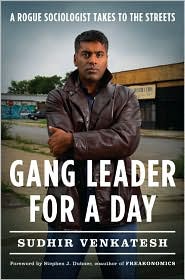
does “rogue” sell books?

Of course we remember Freakonomics: A Rogue Economist Explores the Hidden Side of Everything.  And then Levitt’s sometime co-author writes Gang Leader for a Day: A Rogue Sociologist Takes to the Streets.  And just the other day I saw Rogue Economics: Capitalism’s New Reality.

Maybe rogue economics will become a new subfield for hopeful grad students.  Instead of being a labor and development economist, I could be a rogue economist (you know, I took the two-semester “rogue” sequence) taught by Levitt, Venkatesh, and – of course – Annja Creed, star of the Rogue Angel books, to add a bit of derring-do.

From wikipedia:

Rogue Angel is a paper back series of novels published bi-monthly since July 2006 by Harlequin Publishing’s Gold Eagle division. … The books deliver high-octane action, a basis in history with a twist on the fantastical, and more than a hint of derring-do.

And where are the rogue anthropologists?  I typed that into Amazon Books and got Where Bigfoot Walks, so maybe that’s a hint.