Author: David Evans
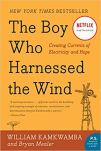
Read African Writers — The Boy Who Harnessed the Wind, by William Kamkwamba and Bryan Mealer

In this memoir, a young man in Malawi has to drop out of secondary school for lack of funds. But with his interest in electronics, access to a modest library, and incredible tenacity, he builds a windmill to generate electricity for his family. The story is inspiring, and it’s not surprising that a movie is coming out soon:
Over the course of the memoir, Kamkwamba gives insight to a range of issues that he and those he loves have faced: surviving a famine, adolescent marriage, getting sent away from school for not having a uniform, having to reduce meals in times of food insecurity, and the HIV crisis (documented in Kim Yi Dionne’s book Doomed Interventions).
I have a couple of quibbles with the book, which necessarily entail spoilers. So if you don’t want those, stop reading now! None of them mean that you shouldn’t read the book. But if you have read the book, I’d be interested in your take.
First, after Kamkwamba builds his windmill and continues to innovate, he ultimately gets “discovered,” first by local media and later by tech types from the U.S. These Westerners sponsor Kamkwamba so that he is able to provide a more stable life for his family and pay the school fees of several of his friends. Kamkwamba goes on to study at elite schools. I’m very happy for him, and I enjoyed hearing about his adventures. But I’m personally less interested in these tales that ultimately hinge on Western charity. (Again, this isn’t a critique of Kamkwamba’s story! It’s just a comment on the kinds of stories I’m most excited to read.)
Second, in the final pages of the book, Kamkwamba calls his fellow Africans to courage: “My fellow students and I talk about creating a new kind of Africa, a place of leaders instead of victims, a home of innovation rather than charity. I hope this story finds its way to our brothers and sisters out there who are trying to elevate themselves and their communities, but who may feel discouraged by their poor situation.” Kamkwamba showed amazing ingenuity and tenacity, but ultimately what pulled him out of poverty was charity. The Western donors weren’t investing in his windmill; they wanted to help out an inspiring kid. I’m glad they did! The story tells us a lot about hard work, but I’m not sure what it tells us about elevating oneself and “innovation rather than charity” (emphasis added).
The audiobook is well read by Chike Johnson. In the ebook — but not the audiobook — there’s a nice epilogue (“about the book”) in which Kamkwamba describes what has happened in his life since the book was published. It seems like he’s doing lots of great work in Malawi and beyond.
This is book #5 in my effort to read a book by an author from every African country in 2019.
Read African Writers — When the Wanderers Come Home, by Patricia Jabbeh Wesley (Liberia)

Born, raised, and educated through university in Liberia, Jabbeh Wesley has lived in the U.S. for much of her adult life. In 2013, she returned to Liberia for four months, giving birth to much of her most recent poetry collection, When the Wanderers Come Home. With powerful imagery, she describes revisiting the land of her youth, now at peace but still struggling after years of civil war. (This was before the massive Ebola crisis made it to Liberia in 2014.)Read African Writers: What It Means When a Man Falls from the Sky, by Lesley Nneka Arimah (Nigeria)

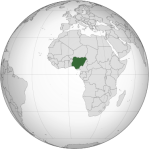
Lesley Nneka Arimah’s debut collection of short stories is a revelation. I first listened to the audiobook — beautifully narrated by Adjoa Andoh — a year ago, and I’ve just re-listened to it. The stories take place in Nigeria, in the U.S., in both. If I had to pick a theme, I’d pick loss, and Arimah explores every cave and crevice extending from that starting point.
Here are a few lines that struck me:
- The U.S., a “country that rewards her brand of boldness, in her black of body, with an incredulous fascination that makes her put it away” (from the story “Light”).
- A father and his daughter: “He does not yet wonder where she gets this, this streak of fire. He only knows that it keeps the wolves of the world at bay and he must never let it die out” (in “Light”).
- “Joy had become a finite meal she begrudged seeing anyone but herself consume” (in “Glory”).
- Turning 50, from the perspective of a child: “Mrs. Ajayi was very old, creeping on that age when life begins to lose all meaning, fifty, I think” (in “Redemption”).
Here is the effusive review that I wrote when I first listened to the book:
A breathtaking collection of stories. The prose is beautiful; it made other books I read or listened to at the same time seem pedestrian. Some of the stories are realistic, others incorporate magical realism. Some take place in Nigeria, others in the U.S., other in both. I’d read a novel by Arimah on any of these stories. One woman observes about her boyfriend: “He didn’t seem to mind how joy had become a finite meal she begrudged seeing anyone but herself consume.” Or a father comments on his daughter: “He should chastise the girl, he knows that, but she is his brightest ember and he would not have her dimmed.” As Marina Warner wrote in the New York Times, “It would be wrong not to hail Arimah’s exhilarating originality: She is conducting adventures in narrative on her own terms, keeping her streak of light, that bright ember, burning fiercely, undimmed.”
At the time of this writing, the ebook on Kindle is available for US$1.99, which is wildly high literary value-for-money.
This was book #3 in my effort to read a book by an author from every African country.
Education finance and household surveys
Here are a couple of recent posts I’ve written on other blogs:
- Education spending and student learning outcomes
- The Analysis of Household Surveys: Reissue edition with a new preface
Check them out!
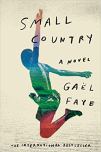
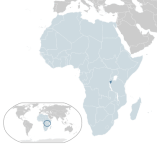
Read African Writers: Small Country, by Gaël Faye (Burundi)

My second book in my effort to read a book by an author from every African country is Gaël Faye’s Small Country. Faye was born and raised in Burundi to a French father and a Rwandan refugee mother. At age 13, he fled to France. Small Country is an autobiographical novel, drawing on Gaye’s childhood experiences.
Here’s my quick take:
Rwanda’s neighbor to the south, Burundi, gets far less attention but also has a deeply troubled history. Faye, born and raised in Burundi to a French father and a Rwandan refugee mother, gives a glimpse at life over the course of coups, civil war, and stealing mangos with the neighborhood boys in this novel. Beautifully written and very evocative, Sarah Ardizzone delivers a lyrical translation into English.
Here are two passages that stood out to me. The first is on the morning of a coup.
I discovered that it was traditional to play classical music during a military coup. On November 28, 1966, for Michael Micombero’s coup, it was Schubert’s piano sonata No. 21; on November 9, 1976, for Jean-Baptiste Bagaza’s coup, it was Beethoven’s 7th symphony; and on September 3, 1987, for Pierre Buyoya’s coup, it was Chopin’s Bolero in C major. On this day, October 21, 1993, we were treated to Wagner’s Twilight of the Gods.
And the other is on genocide, recounted after his mother returns from trying to locate her loved ones after the Rwandan massacre.
Genocide is an oil slick: those who don’t drown in it are polluted for life.
Highly recommended. The audiobook is well narrated by Dominic Hoffman.
My #ReadAfricanWriters challenge for 2019
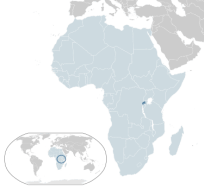
This year I plan to read a book by an author from every country across Africa. That’s 54 countries. I’ll blog and tweet about it under the hashtag #ReadAfricanWriters. You can also follow my progress on this map.
And here’s my first entry for the year, a memoir by an author from Rwanda!

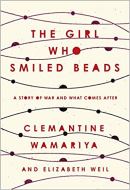
The Girl Who Smiled Beads: A Story of War and What Comes After, by Clemantine Wamariya and Elizabeth Weil.
Here’s my quick take:
Wow. Clemantine Wamariya was just six when the Rwandan genocide took place. Separated from the rest of her middle class family, she and her teenage sister Claire traverse several countries, in and out of refugee camps. Eventually they make it to the USA. The book gives a devastating portrait of how conflict and being a refugee can affect a child, and how a young woman seeks to make sense of her experience, including through literature, from Elie Wiesel to W.G. Sebald. Beautiful and gripping and thoughtful. Highly recommended.
Here’s how the publisher describes the book:
Clemantine Wamariya was six years old when her mother and father began to speak in whispers, when neighbors began to disappear, and when she heard the loud, ugly sounds her brother said were thunder. In 1994, she and her fifteen-year-old sister, Claire, fled the Rwandan massacre and spent the next six years migrating through seven African countries, searching for safety—perpetually hungry, imprisoned and abused, enduring and escaping refugee camps, finding unexpected kindness, witnessing inhuman cruelty. They did not know whether their parents were dead or alive.
The book also made it onto the Washington Post’s list of notable books for 2018.
My top movies of 2018
I watched 76 movies in 2018. Here are my 8 favorites.

RBG — This documentary provides a compelling, inspiring portrait of U.S. Supreme Court Justice Ruth Bader Ginsburg, and her consistent fight for equal opportunities.
Won’t You Be My Neighbor — Fred Rogers was also a warrior for the good, albeit working in a very different medium. This document was beautiful and moving. I watched his show faithfully as a child and still learned a great deal.
I want to be either RBG or Fred Rogers when I grow up. But if I can’t pull that off, at least I can re-watch these excellent movies about them.
The Great Buster: A Celebration — Buster Keaton is best known for a series of silent comedy films that he created in the 1920s. But he worked right up until his death in the 1960s. This is a hilarious retrospective of this amazing filmmaker.
Leave No Trace — Beautiful movie about a father and daughter who seek to live completely off the grid in the woods of Oregon.
I Am Not a Witch — This is a powerful film about the exploitation of a vulnerable group — accused witches — in Zambia.
Border — A Swedish border guard seems to have a supernatural sense of smell, allowing her to smell fear and more. She meets one man who confounds her ability, and very strange events unfold. The less you know, the better. I love it when a movie swings big on the surprising and pulls it off (even mostly).
Paddington — This was a re-watch, but such a delight! Sally Hawkins is one of my favorite actors, and she’s part of a wonderful ensemble here.
Paddington 2 — This film will envelop you in good feelings. The title character is sweet but not syrupy, and Hugh Grant — as a washed-up actor — plays a delightful villain.
Here are some other movies that I loved (albeit a little less).

And here are some movies that I really enjoyed — just, you know, a little less.

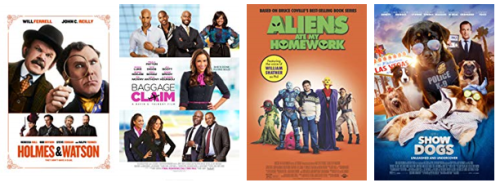
Lest you think I like everything, here are some movies that I thought were actively bad. (I’m skipping a bunch of movies that I enjoyed just a bit.)

How to read a lot of books
In 2018, I read or listened to 104 books. That’s high for me, but I consistently go through dozens of books in a year. Here are some steps I take to help me go through a lot of books and to get the most out of them.
How to read a lot of books
Read in all formats. About half of the books I consumed in 2018 were audiobooks. Another 16 books were ebooks, which I read on my smartphone. And the rest were traditional print books. Consistently having a book in each format means that I can always be reading. Have to wait in a lone line? Read the ebook on my phone! Have to jog out to the car to get something? Squeeze in a few minutes of my audiobook! Have a few minutes before going to sleep? Push through a few pages of my print book!
Each of these formats has its advantages. Ebooks make it much easier to copy passages I love for future reference. “Audiobooks add literacy to moments where there would otherwise be none,” as psychologist Daniel Willingham has written. Furthermore, when I’m reading a book that takes place in culture distinctive from my own, and the audiobook narrator can represent the accent accurately, the experience is richer. Nowadays, some audiobooks have a full cast, so it’s like a theater in your ears.
Audiobooks are also good for helping me to push through big nonfiction books that I mightn’t otherwise find time for. People say to me, “But I retain less from audiobooks.” That’s probably true for me too, but I’d much rather have 50% [made-up number] of a great book that I listened to than 0% because I was hoping eventually I’d read it but never found time. I also take steps to enhance retention from audiobooks — more on that below.
Many public libraries in the United States have an app which will let you download free audiobooks, like Overdrive. There are also apps you pay for, like Audible. (Here’s my post on getting started in audiobooks.)
With audiobooks, experiment with faster speeds. A few years ago, a friend told me he was listening to books at double speed. I thought, that’s insane! Where’s the pleasure in that? How can you even follow along? So I tried 1.25 speed. It sounded a little fast, but I got used to it, so much so that regular speed started to sound…very…slow… Then I upped to 1.5 speed. And so on. Now my default is double speed. If I’m listening to a book with a narrator with an unfamiliar accent, I slow it down. Same with a book with particularly difficult content — e.g., a technical economics argument or a physics explanation. But with a high speed default, I go through a lot of content.
Shift focus to books rather than movies. Early in 2018, I deleted Youtube and Netflix apps from my phone, and I deleted my normal pop culture podcasts. I replaced them with book podcasts, like the New York Times Book Review podcast and Bookworm. So instead of hearing about movies I wanted to see, I was hearing about books I wanted to read or listen to. (I still saw a lot of movies, and I eventually re-downloaded Netflix because that’s how much self control I have. But it was a strong start.)
How to get the most out of the books you consume
Of course, my goal isn’t just to get through lots of books. I also want to get the most out of the books I’m reading. Here are some steps I take to do that.
Talk about books with other people. Discussing the books I’m reading opens new perspectives and clarifies my own views. I participate in two book clubs, where I chat with friends about great books. One meets at lunchtime during the workday, once every month or two. (You have to eat lunch, right?) Another meets on a weekend evening. I also chat with friends on social media about the books I’m reading.
Some friends and I created a shared Google Sheet on which we each record our books (and movies) for the year, so we can get recommendations from each other and talk about the books that we’ve both read. (For the competitive among us [me], it also fosters a desire to keep reading.)
Another, less literal way of doing this is to read professional review of the book, after I’ve read the book. Great reviewers can often capture what I’ve been thinking but express it more lucidly, saving me the trouble of wordsmithing the perfect characterization.
Make notes. For every book I read, I create a note in my note-taking app (Evernote). If I’m reading a print book, I’ll sometimes take a picture of a passage that strikes me and paste that into the app. If it’s an ebook, I’ll copy and paste key quotes. If it’s an audiobook, when I hear a passage that really strikes me, I jot down a few words in my notes app. Then, later, I’ll look up the quote in full on Google Books or Amazon’s book preview and paste a screenshot into my notes app.
I also have “topical” notes in my notes app, e.g., a note on “education,” and when I’m at my best, I’ll copy great thoughts on education from my book-specific note over to the topical note. But I don’t always get around to this, admittedly.
Write a quick summary. I try to write a short summary of every book I read, along with quick impressions. These are often shorter than the length of a tweet (i.e., less than 280 characters). But years later, they let me remember what my impressions were and what it taught me about the human condition!
That’s it! Those are all my secrets! Now if only I could remember what I read earlier this morning…
My top books of 2018

-
What It Means When A Man Falls from the Sky, by Lesley Nneka Arimah. This short story collection by Arimah — from Nigeria — has gorgeous prose and deep feeling. I’d read a novel based on any of these stories. My favorite work of fiction of the year.
-
My Sister, the Serial Killer, by Oyinkan Braithwaite. Korede, the nurse, is always cleaning up after her sister… That is, her sister’s murder scenes! It’s a fast-paced, wild ride. Really enjoyed it.
-
Behold the Dreamers, by Imbolo Mbue. Cameroonian immigrants struggle in NY. Fascinating, heart-reading interpersonal dynamics set against the backdrop of the 2007 recession.
-
Freshwater, by Akwaeke Emezi. A girl is inhabited by various gods, which translates into multiple personalities including a fluid sexual identity. A fresh, original voice.
-
She Would Be King, by Wayetu Moore. A magical realist tale of the founding of Liberia with three superheroes. It takes a while to get moving, but then it’s unstoppable.
-
Pachinko, by Min Jin Lee. This captivating epic follows a Korean family over decades during the Japanese occupation of Korea, migrating to Japan early in the novel. My favorite novel of the year.
-
Nutshell, by Ian McEwan. Amazing prose and a tight thriller to boot, all narrated from inside the womb. Think Hamlet… Oh, never mind, just read it.
-
Of Mice and Men, by John Steinbeck. Brief, beautiful, and tragic. The elusive quest for the American dream, or any dream of a better life.
-
The Power, by Naomi Alderman. What if women suddenly became physically dominant? Power corrupts, no matter the gender. Delightful exploration of shifting power dynamics.
-
Exit West, by Mohsin Hamid. Gorgeously written story of a refugee couple.
-
MacBeth, by Jo Nesbø (translated by Don Bartlett). Nesbø updates Shakespeare’s play as a 1970s crime thriller. Equal part thrilling in plot and fascinating to see how he adapts the old play. Maybe a little long, but it didn’t really lag. I’m just impatient.
-
Super Sad True Love Story, by Gary Shteyngart. A satirical look at the future, where social media is even more dominant than it is today. Think Dave Eggers’ The Circle but farcical.
-
Fates and Furies, by Lauren Groff. Groff captures fabulously the loneliness of the person obsessed with the praise of others. Oh, and his wife has secrets. (Think a much more literary Gone Girl.)
-
Archaeopteryx, by Dan Darling. A magical realist thriller novel about society’s misfits, corporations tampering with nature, and immigration — all set in beautiful New Mexico.
-
An American Marriage, by Tayari Jones. When an African-American man is unjustly imprisoned, what’s the impact on a marriage? Heartbreaking. Good writing. Maybe a tiny bit long.
-
Sing, Unburied, Sing, by Jesmyn Ward. Beautiful, difficult novel about a low-income African American family. with ghosts.
-
Sharp Objects, by Gillian Flynn. Solid thriller. Very dark. Surprised me even when I thought I was done being surprised. (Not as good as her Gone Girl but better than her Dark Places.)
-
Push, by Sapphire. A harrowing account of a deeply abused young woman and how learning to read and write offer a path to healing.
-
Son, by Lois Lowry. This finale in Lowry’s “The Giver” quartet is a great finale, a good meditation on wants and needs, and it makes the third book – Messenger – more satisfying.
-
Norse Mythology, by Neil Gaiman. Excellent, entertaining retelling of Norse myths. Gaiman narrates the audiobook. A pleasure to listen to.
-
Binti, by Nnedi Okorafor. Binti leaves earth to attend a university with 5 percent humans. Suddenly she’s in the middle of a war. Oh, and she LOVES math. I particularly loved the mathematical meditation.
-
Who Gets What ― and Why, by Alvin Roth. Roth, winner of the economics Nobel prize, shows how important rules are for making markets work. Especially matching markets, like organs and school placement. He shares his extensive experience in designing difficult markets. Enlightening and inspiring, it shows — if you had any doubt — the good that economics can do in the world.
-
Straight Talk on Trade: Ideas for a Sane World Economy, by Dani Rodrik. An accomplished economist who isn’t afraid to talk straight on international trade, the pluses and minuses, and how to move forward. AND he quotes Shteyngart’s Super Sad True Love Story in his conclusion.
-
Economism: Bad Economics and the Rise of Inequality, by James Kwak. Great discussion of how simplistic economic models are used for political ends.
-
Factfulness: Ten Reasons We’re Wrong About the World–and Why Things Are Better Than You Think, by Hans Rosling, Anna Rosling Rönnlund, and Ola Rosling. Great treatise on “data as therapy,” how many aspects of the wider world are better than widely reported, and how to interpret stats more responsibly. Mixed with a lot of charming and exciting (and sometimes devastating) anecdotes from Hans Rosling’s life.
-
The Undoing Project: A Friendship that Changed Our Minds, by Michael Lewis. A fascinating story of breakthroughs in psychology, together with the account of a research partnership that soured but never died. Great example of popular writing about social science, in many ways. A couple of the “aside” chapters weren’t perfectly integrated, but a good example of turning social science into a compelling saga.
-
The Great Escape: Health, Wealth, and the Origins of Inequality, by Angus Deaton. Nobel Prize winning economist explains global inequality in health and wealth + the dangers of aid. Lots of intelligent thinking here, even if you don’t agree with everything.
-
What Would the Great Economists Do? How Twelve Brilliant Minds Would Solve Today’s Biggest Problems, by Linda Yueh. Fun bios of great economists with lots of delightful detail, combined with less interesting of current economic issues. The former outweighed the latter.
-
Doomed Interventions: The Failure of Global Responses to AIDS in Africa, by Kim Yi Dionne. Through a healthy mix of ethnographic fieldwork, original survey collection, and large-scale survey analysis, Dionne shows that international donors care a lot more about HIV/AIDS than African do.
-
I Am Malala: The Girl Who Stood Up for Education and Was Shot by the Taliban, by Malala Yousafzai with Christina Lamb. This is what standing up for what you believe in looks like.
-
The Recovering: Intoxication and Its Aftermath, by Leslie Jamison. I adored this mix of recovery memoir and exploration of addiction and creativity, and the racial and class divide of addiction public policy. A little sprawling but worth it.
-
Educated, by Tara Westover. Tough memoir of a childhood in a survivalist Mormon household and the author’s ultimate escape. Spends some time on her own imperfect memory and questions of historiography.
-
The Best We Could Do: An Illustrated Memoir, by Thi Bui. A Vietnamese-American explores her family history and what it means for her identity. Beautiful and powerful. Some Vietnamese history mixed in.
-
You & a Bike & a Road, by Eleanor Davis. Travel memoir of biking across the country. Lots of honest emotion. Quick and interesting.
-
The Dead Eye and the Deep Blue Sea: A Graphic Memoir of Modern Slavery, by Vannak Anan Prum. A Cambodian man is enslaved on a fishing boat. After his escape, his documents his story through the images in this book. Powerful and heartbreaking.
-
Hostage, by Guy Delisle (translated by Helge Dascher). Delisle uses a graphic novel to tell the true story of a humanitarian worker who was kidnapped in the Caucases. It is excruciating in the best way, as we follow the hostage’s thoughts and efforts to escape. (I also liked Delisle’s book Pyongyang, about his year working in North Korea.)
-
Going into Town: A Love Letter to New York, by Roz Chast. “This book is a sort-of guide and also a thank-you letter and a love letter to my hometown and New Yorkers everywhere.” Fun book. I laughed aloud many times.
-
My Favorite Things Is Monsters – Volume 1, by Emil Ferris. My favorite graphic novel of the year (lots of other people agree with me). Compelling, gorgeous, very dark mystery and bildungsroman set in 1960s Chicago.
-
Three Shadows, by Cyril Pedrosa (tr. from French by Edward Gauvin). How far will a parent go to save their child from death? This is an urgent little fable. “In this our springtime there is no better, there is no worse. Blossoming branches burgeon as they must. Some are long, some are short.”
-
Boundless, by Jillian Tamaki. Wonderfully weird collection of short stories in comic format. Ends mid-word.
-
Men Explain Things to Me — Updated edition with two new essays, by Rebecca Solnit. Thoughtful, engaging, fair collection of essays on women in society.
-
Browse: The World in Bookshops, edited by Henry Hitchings. Lovely collection of essays about bookshops by writers from around the world — India, China, Turkey, Colombia, Kenya, the U.K., Denmark, Italy, Germany, the Ukraine, and the U.S.
-
Don’t Call Us Dead, by Danez Smith. Tragic, beautiful poems about black men killed by police, being black and gay, being HIV+. (A lot of other people recommend this collection, too!)
-
Wild Things: The Joy of Reading Children’s Literature as an Adult, by Bruce Handy. Delightful analysis of many childhood classics. Don’t miss the footnotes nor the appendix.
-
The Moomins and the Great Flood, by Tove Jansson (translated by David McDuff). Delightful, sweet, with beautiful illustration. My favorite Moomin book so far. If you don’t know the Moomins, this is a great place to start. Think Winnie the Pooh but wonderfully weirder.
-
Le Petit Prince, by Antoine Saint-Exupery. Poignant, and troubling as I grow older and increasingly identify with the businessman and the lamplighter. I listened in French, so I didn’t catch everything.
-
Brave, by Svetlana Chmakova. This is the second in Chmakova’s deeply affecting middle school graphic novel trilogy. This one explores bullying and left me in tears.
-
Hilo Book 4: Waking the Monsters, by Judd Winick. A girl’s mom wants her to be a cheerleader; she wants to be a ninja wizard instead. Robots! Aliens! So much awesomeness!