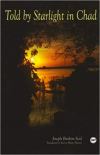
 Joseph Brahim Seid, a writer and politician (he was Minister of Justice for nearly a decade) from the Republic of Chad, wrote a collection of folktales in the early 1960s — Told by Starlight in Chad. “I invite you, dear reader, to come and sit with us, under a blue sky strewn with stars, to listen to these stories and legends, which tell of marvels and wonders. We ask only one thing: that you share in the joy of our candor and our innocence.”
This collection of 14 tales is a delight. In one (“The Most Beautiful Girl in the World, Hidden under an Ass’ Skin”), a woman gives birth to a donkey, but a beautiful girl is hidden under the donkey skin. One boy sees the beauty and proposes marriage, to the initial ridicule and ultimate acclaim of all. In another, reminiscent of Hansel and Gretel (“Gamar and Guimerie”), two siblings are chased off by a wicked stepmother but then rescue a monster in exchange for great riches. In “Nidjema, the Little Orphan Girl,” the titular character seeks to escape a terrible home environment and encounters terrible monsters and even death itself. In my favorite, “The Magic Cap, Purse and Cane,” a young man seeks the hand of a sultan’s daughter. He is treated horribly despite his access to various magic items, and the ending of the story manages to surprise.
The translation into English by Karen Haire Hoenig, published in 2007, has its own story. Hoenig’s father nearly completed a translation of the book, but after he passed away, the manuscript was lost. As a labor of love, his daughter took up the task.
This is book #46 in my effort to read a book by an author from every African country in 2019. You can read reviews of all the books here.
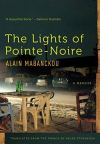
 Alain Mabanckou was born in the Republic of the Congo — not the Democratic Republic of the Congo, the other one, sometimes referred to as Congo-Brazzaville. In his early 20s, he left to study in Paris. Later he moved to the teach in the United States. Then, after more than two decades away, he returned to his hometown, Pointe-Noire, for a visit. In his memoir of the visit —
 Rashidah Ismaili was
 Over the course of my project this year to read a book by an author from each of Africa’s 54 countries, I’m struck by how many countries have just one novel available in translation.
 Angèle Rawiri’s
 In
In 
 Much of my work centers on evaluating the impact of international development interventions. We’re always searching for what we call a “counterfactual,” or what would have happened to the beneficiaries of an intervention if they hadn’t received it. Sometimes, fiction writers create speculative counterfactuals of their own, as in Yaa Gyasi’s wonderful novel
 Nouhou Malio was a griot — a “
 Do you ever read a book that’s so good that you want everyone you know to read it? These are those books! Marguerite Abouet grew up in Côte d’Ivoire, then moved to France at the age of 12. In
 Early in his memoir of his time as a detainee at Guantanamo Bay, Mohamedou Ould Slahi of Mauritania tells the story of a man who goes to a psychiatrist, complaining about a rooster: The man says, “’The rooster thinks I’m corn.’ ‘You’re not corn. You are a very big man. Nobody can mistake you for a tiny ear of corn,’ the psychiatrist said. ‘I know that, Doctor. But the rooster doesn’t. Your job is to go to him and convince him that I am not corn.’ By Slahi’s account, his 15 years of detentions were one long process of convincing the rooster (the U.S. government) that he wasn’t corn (involved in terrorism).
 David Evans' personal blog