In writer Troy Onyango’s short story “A Song from a Forgotten Place,” a character reflects on Congolese music:
She has always preferred Congolese music; the way it springs from a place is warmth and tenderness like a beanstalk breaking through the soft earth. Then it rises and rises, growing and filling the whole room with the sweet melody that makes the body jelly and the bones rubbery and one finds oneself loving his waist, legs, and arms as if possessed by a gentle, cultured demon (but still a demon all the same), and one can dance and dance and not feel the sweat trickling down the ridge of his back or feel his legs stiffen at the knees because he’s tired. One ignores all that. Lingala flows and erupts within the body.
Put on some Congolese music, quick!
You can read Onyango’s story in the collection Nairobi Noir. You can find out more about him and his writing at his website.
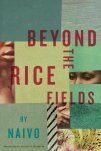
 Until two weeks ago,
 Asouf lives alone in the desert. He cares for massive, ancient rock paintings and guides the tourists who venture to see them. He alone knows where to find the sacred waddan, “a kind of wild mountain sheep … the oldest animal in the Sahara.” In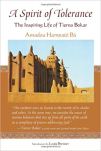
 Amadou Hampaté Bâ was a writer well-known in his native country of Mali and beyond. He lived 90 years and wrote both fiction and nonfiction. In 1957, he wrote a biography of and collection of teachings by his spiritual leader, Tierno Bokar. He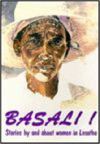
 For a time, K. Limakatso Kendall taught at the National University of Lesotho. While there, she gathered stories by or about the women of Lesotho. (Three quarters are by women; the rest are by men, recounting stories told to them.) In the wonderfully idiosyncratic collection,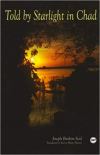
 Joseph Brahim Seid, a writer and politician (he was Minister of Justice for nearly a decade) from the Republic of Chad, wrote a collection of folktales in the early 1960s —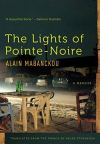
 Alain Mabanckou was born in the Republic of the Congo — not the Democratic Republic of the Congo, the other one, sometimes referred to as Congo-Brazzaville. In his early 20s, he left to study in Paris. Later he moved to the teach in the United States. Then, after more than two decades away, he returned to his hometown, Pointe-Noire, for a visit. In his memoir of the visit —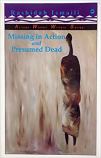
 Rashidah Ismaili was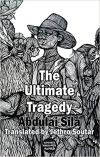
 Over the course of my project this year to read a book by an author from each of Africa’s 54 countries, I’m struck by how many countries have just one novel available in translation.
  David Evans' personal blog